Mastering generative engine optimization (GEO) is the core skill of AI SEO. It means structuring your content and brand presence so that AI tools such as ChatGPT, Google AI Overviews, Perplexity, Claude and Copilot can find it, trust it and cite it inside their answers. Classic SEO fights for a place in a list of ten links. GEO fights for a mention among the few sources an AI answer actually names.
This article gives you the full picture in one place. You will see why GEO matters, which tactics earn citations, how to measure results with a simple tracking routine, and how to learn the skill. That includes what the Coursera program "AI SEO: Mastering Generative Engine Optimization (GEO)" covers and how to judge any other course.
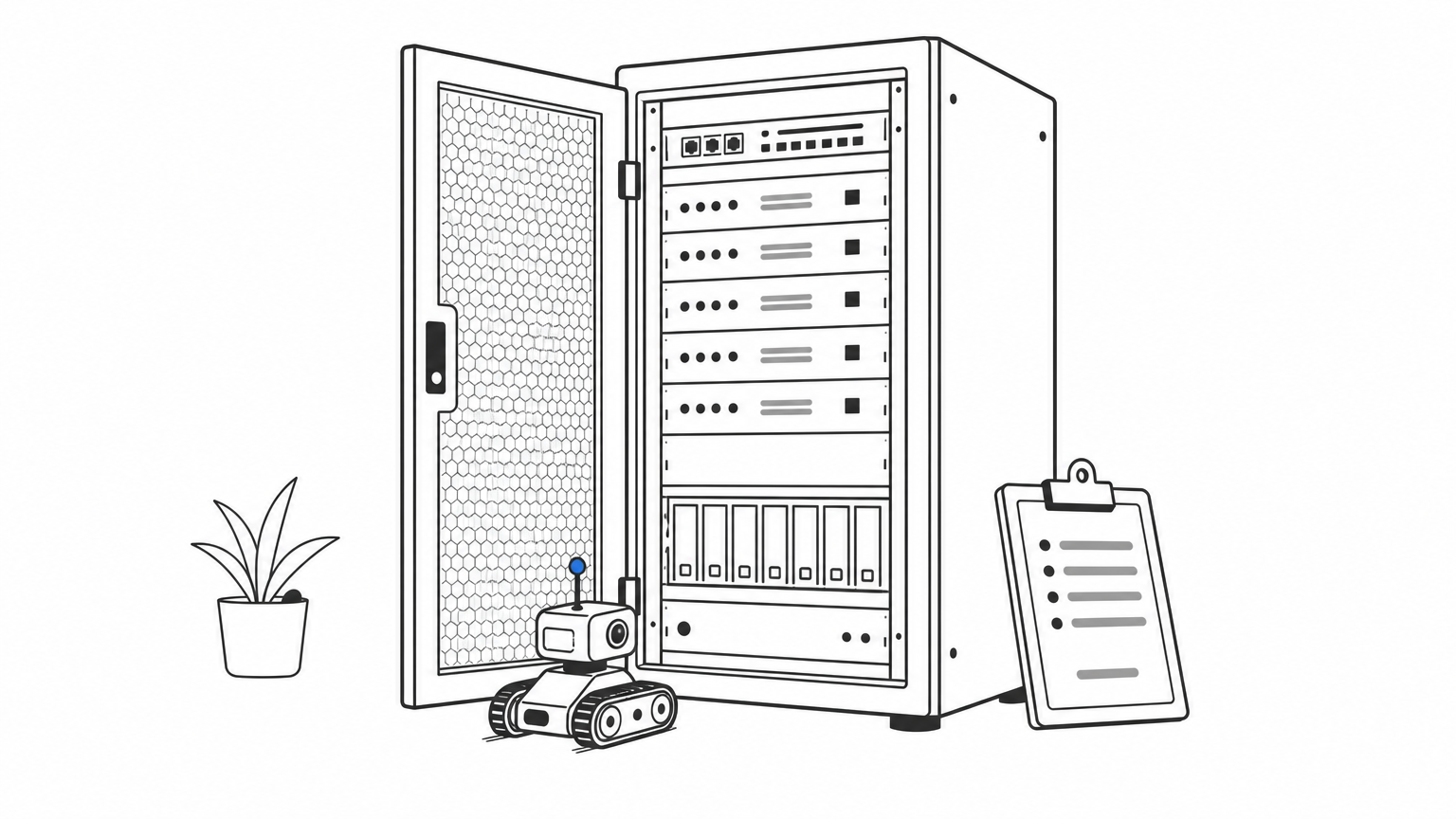
At Nostra AI we run agents at the edge of ecommerce storefronts. One of them, Sherlock, identifies and verifies the AI crawlers that visit a store. That gives us a practical view of GEO from the server side, where every citation starts: an AI engine cannot cite a page it never reached.
GEO matters because AI answers now sit between your customer and your website. Being named in them decides whether you make the shortlist at all.
People now ask AI tools for product recommendations, comparisons and research. A search engine shows ten results. An AI engine typically cites only two to seven domains in a single response. The competition for each slot is tougher, but a named brand also gets something a blue link never gave: an implicit endorsement from the engine.
Research points the same way. The Princeton-led study that coined the term found that adding quotes and statistics raised visibility in generative responses by roughly 30 to 40 percent. Later work on citation bias found that AI engines lean toward earned media, meaning third-party coverage and reviews, over a brand's own pages.
If an AI answer does not name your brand, the shopper never sees you in the comparison.
GEO builds on SEO. It does not replace it. Google's own guidance on AI features says the same fundamentals apply to AI Overviews and AI Mode: helpful content, crawlability and a good page experience. What changes is the unit of success and the way you measure it.
| SEO | GEO | |
|---|---|---|
| Goal | Rank in search results pages | Be cited or recommended inside AI answers |
| Unit of success | A page ranking for a query | A passage or brand mention in a generated answer |
| Key tactics | Crawlability, keywords, intent match, backlinks | Extractable passages, third-party mentions, AI crawler access, freshness |
| Metrics | Rankings, organic traffic | Citation frequency, share of voice, sentiment, AI-referred visits |
Treat them as one strategy with two scorecards. If your SEO is solid, you are already most of the way there, and the work below fills the gap.
You practice GEO in four moves: write passages that stand alone, earn mentions beyond your own site, let AI crawlers reach your pages, and keep your content current.
AI engines break pages into passages and judge each one on clarity and factual density. Open every section with the direct answer, then add context. Use clean H2 and H3 headings, define terms in one plain sentence, and put comparisons in tables.
Add sourced statistics, named examples and expert quotes where they help the reader. Do not pad the page with them, because content stuffed with numbers and no real value fails with people and with machines alike. Publish original data or first-hand experience when you have it, since lookalike content gives an engine no reason to pick you. Refresh cornerstone pages with a visible update date whenever the facts change.
Write every section so it still makes sense when an AI engine lifts it out of the page.
Because engines favor earned media, your reputation off-site counts. Keep your brand name, product names and descriptions consistent everywhere. Publish detailed About and author pages. Pursue reviews, industry press and genuine participation on platforms like Reddit and YouTube, which show up often in AI answers. A Wikipedia entry helps only when your brand qualifies for one, so never force it.
Unlinked mentions seem to carry weight too. That is good news for brands that have never run a link-building campaign.
AI engines can only cite what their crawlers reach. Check that your robots.txt does not block the major AI crawlers:
User-agent: GPTBot
Allow: /

User-agent: ClaudeBot
Allow: /

User-agent: PerplexityBot
Allow: /
Then check three more things:
On the rendering point, Nostra's Edge Optimization directs search engine bots to a JavaScript-free version of the site and serves prerendered, cached pages so new and edited pages are indexed faster. An llms.txt file is optional. Treat it as low priority next to everything above.
Measure GEO by running a fixed set of prompts across AI platforms on a schedule, recording how often your brand is cited and how it is described, and comparing the numbers with your competitors'.
Rankings tell you little here, so track these instead:
| Metric | What it tells you | How to collect it |
|---|---|---|
| Citation frequency | How often AI answers name or link your brand | Run your prompt set and log each result |
| Share of voice | Your mentions against competitors' | Same log, counted for each brand |
| Sentiment and accuracy | Whether the answer describes you correctly | Read the answers and flag errors |
| AI-referred traffic | Visits and conversions that arrive from AI tools | Referral reports in GA4 |
Say you pick 20 buyer-style prompts and check them on 3 platforms each month. That is 60 checks. Your brand is cited in 9 of them, a 15% citation rate. A competitor is cited in 21, which is 35%. You restructure your 10 weakest pages, add sourced comparison tables and fix crawler access. Next month you are cited in 15 checks, a 25% rate. Answers vary from run to run, so repeat each prompt and compare trends, not single results.
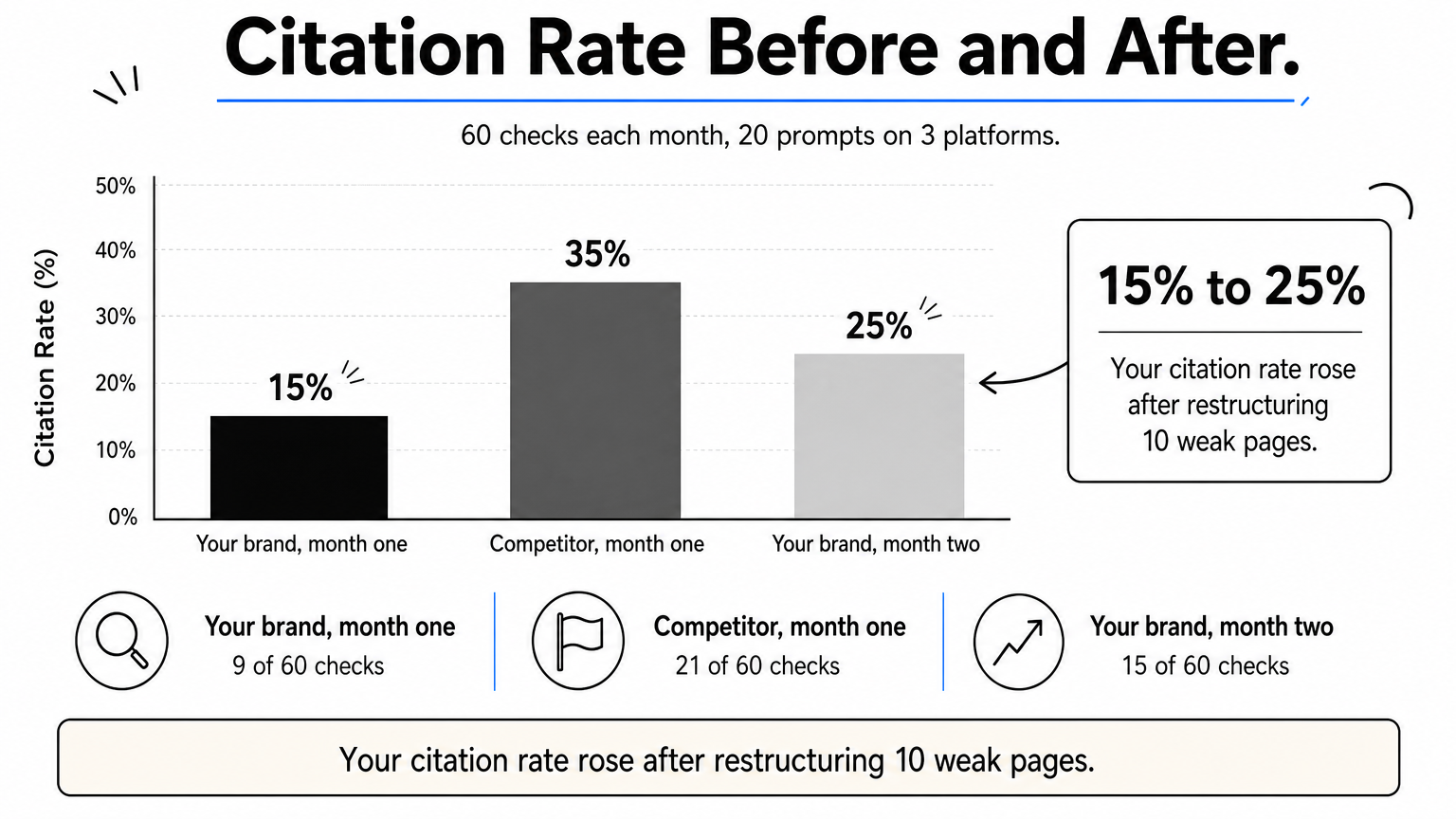
Track the same prompts every month, because a stable test set is the only way to see real movement.
Measurement breaks when bot traffic muddies your analytics. Sherlock, the AI Discovery Agent behind Nostra's Edge Detect, identifies and verifies AI crawlers visiting a storefront. It streams that data to your AEO and analytics tools, so you can separate crawler visits from human visits that arrive from AI answers. Malicious bots are a different problem, and they inflate sessions and waste ad spend. Keep them out of the same reports.
The fastest route is a short structured course followed by hands-on practice on your own site. The Coursera program "AI SEO: Mastering Generative Engine Optimization (GEO)" is a sensible first step for beginners and intermediate marketers.
The course is short, at roughly four hours. It begins with a light transition from SEO to GEO. It then moves into tracking, metrics and redesigning content for AI visibility. Labs give you practice with content mapping and GEO metric analysis, and there are quizzes and an interactive podcast episode. Learners note it has only two practical exercises, so plan to apply what you learn on a real site. Check the course page for current pricing and access options.
Use this checklist before you spend money or time:
A certificate is a weak signal right now. It shows you studied, not that you can execute.
A certificate shows you studied, but a before-and-after citation report shows you can do the work.
GEO is SEO extended to a new kind of reader. Write passages that answer directly, earn mentions outside your site, keep AI crawlers able to reach your pages, and measure citations on a schedule. A short course gives you the vocabulary, and a 30-day practice loop on your own site gives you the proof.
Measurement only works when your traffic data is honest. If bots are inflating sessions and draining ad budgets, fix that first. You can filter bad bots before they reach your store with Edge Protect, so your AI visibility numbers reflect real shoppers.


