The best bot detection and mitigation software spots automated traffic by how it behaves, not just where it comes from. It blocks the harmful part without challenging real shoppers, and it covers every surface you expose, from web pages to mobile apps and APIs. Ecommerce brands that want protection without engineering work should start with Nostra AI's Knox. Teams already on Cloudflare should look at its Bot Management first. Large enterprises with security staff should compare Akamai, Imperva, Radware and F5. DataDome and HUMAN suit teams that need broad coverage across web, mobile and APIs.
Bad bots scrape prices, stuff credentials, hoard inventory and click your ads. The damage is often quiet. Sessions inflate, conversion rate looks worse than it is, and ad spend leaks into traffic that will never buy. Choosing a tool is hard because every vendor claims AI detection and few false positives.
This article compares eight tools on how they detect bots, how they deploy, who they fit and where they fall short. Nostra AI makes Knox, so it is listed first, and it gets the same format and the same honest limits as the others. A comparison table and a worked example near the end help you narrow the list.
Knox is the bot agent behind Nostra AI's Edge Protect, and it deploys with a DNS-level change and no code. It blocks malicious bot traffic at the edge before it can distort your analytics or waste ad spend, and it needs no engineering project to go live.
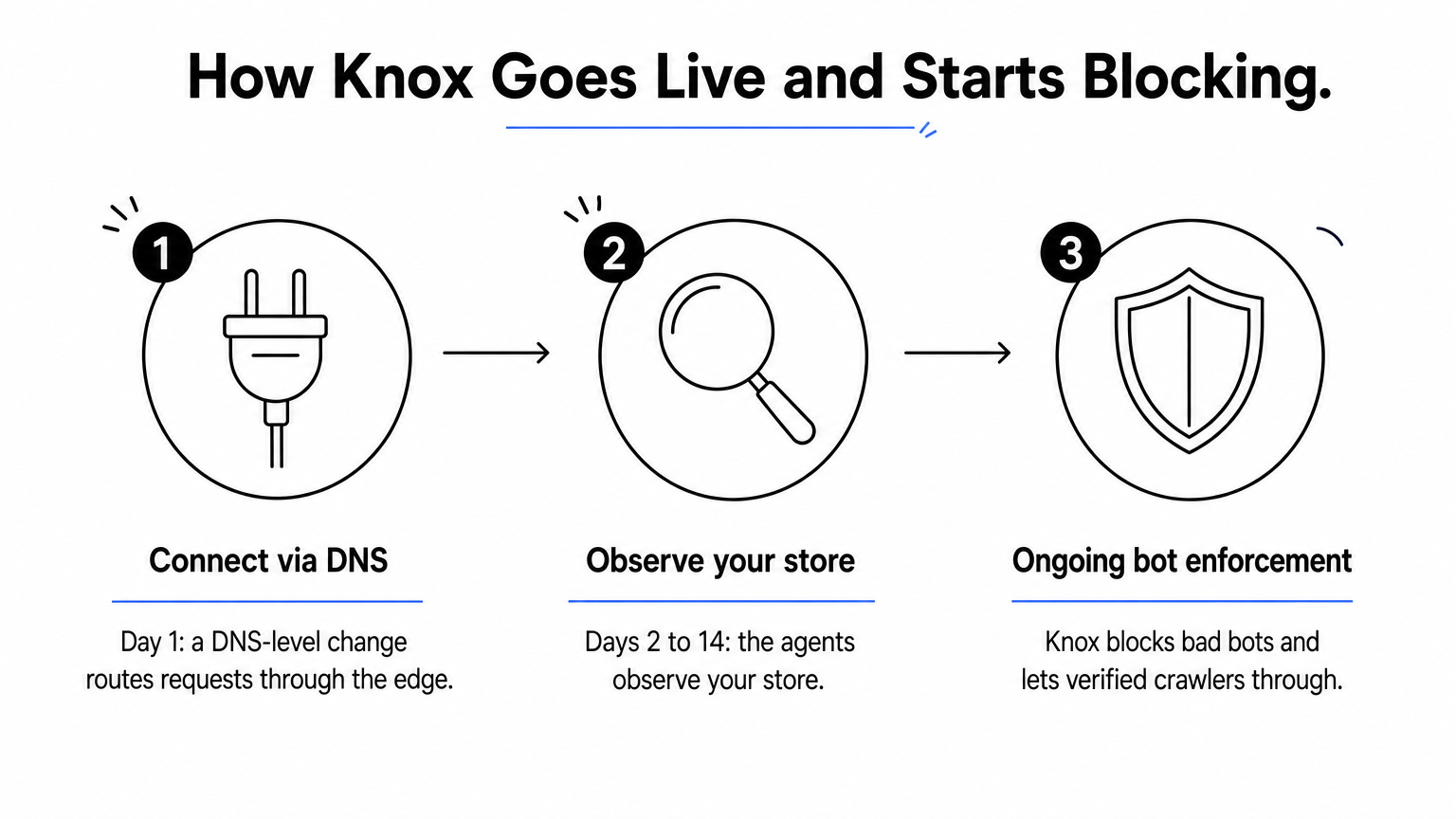
Knox is a low-effort option: a DNS-level change, no code, and live in under a day.
Nostra AI connects to your store with a DNS-level change, so requests pass through its edge layer before they reach your storefront. Knox filters bad bots there in real time. You change no code and replatform nothing. Nostra fully manages the runtime infrastructure, and the platform is SOC 2 compliant.
Knox does not block everything automated. Verified crawlers such as Googlebot, ChatGPT and Claude are let through, so search indexing and AI discovery keep working. After day 1, the agents spend days 2 to 14 observing your store, then move to ongoing enforcement. Nostra reports more than 10 billion bots blocked annually across its brands. A sibling agent, Sherlock, identifies and verifies AI crawlers and streams that data to AEO and analytics tools, so you can see which automated visitors are worth keeping.
Knox fits mid-size to large ecommerce and DTC brands on Shopify or Salesforce Commerce Cloud whose growth and ecommerce teams have no spare engineers. More than 300 brands run on Nostra AI, including Nixon and Credo Beauty. It pays off most when bots inflate sessions in GA4, skew Meta and Google reporting, or eat paid clicks.
The commercial terms are simple:
Knox trades configurability for speed and low risk. That is the right trade for most storefront teams and the wrong one for some security teams.
Cloudflare Bot Management applies machine learning and behavioral analysis across Cloudflare's global network to detect and stop malicious bots before they reach your origin. It is the natural pick when your traffic already runs through Cloudflare.
If your traffic already flows through Cloudflare, its bot management is the shortest path to protection.
Cloudflare scores each request using machine learning, behavioral analysis and fingerprinting, drawing on traffic from its whole network. You write rules that act on the bot score: allow, challenge or block. Because Cloudflare is a reverse proxy, the traffic is already in the right place for inspection.
Cloudflare also offers Turnstile, a CAPTCHA alternative that challenges visitors without making them solve puzzles. Lower plans include lighter bot controls, such as Bot Fight Mode. The full scoring product is an enterprise offering, so expect a sales conversation.
Cloudflare suits SaaS and ecommerce teams that already use it for DNS or CDN and have someone who can write and tune rules. It is a poor fit if nobody on your team wants to own rule maintenance.
Pick it if:
Akamai Bot Manager is an enterprise product that detects and mitigates bots at the edge, where they first make contact with your application. It protects web pages, native mobile apps and APIs.
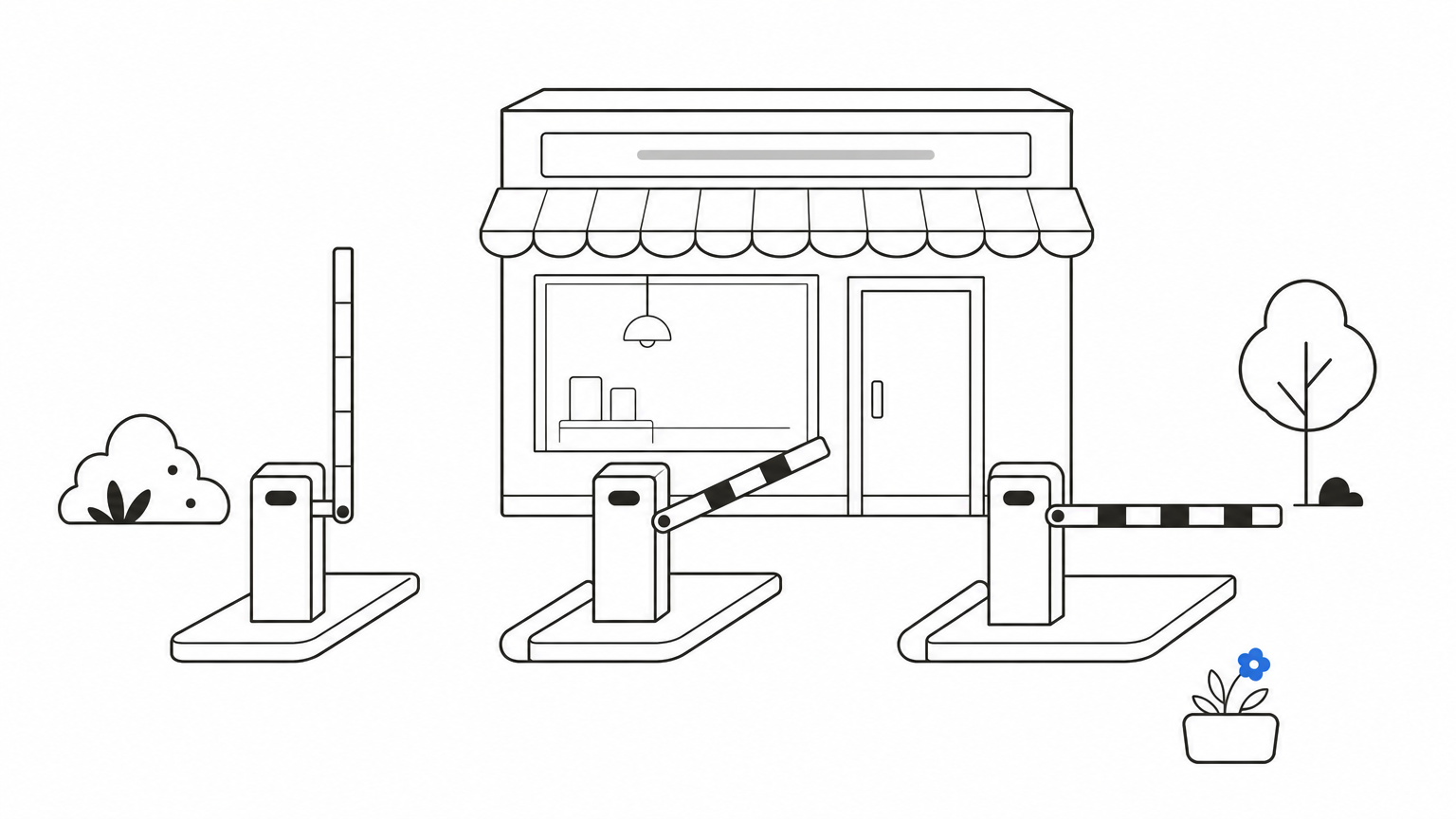
Akamai's strength is graded response: low-scoring bots are watched, high-scoring bots are blocked, and the gray area gets challenged.
Every request receives a Bot Score that combines all detection signals. Scores fall into three ranges. Low scores are monitored, high scores are aggressively mitigated, and the middle range is challenged to separate humans and good bots from malicious ones. Detection draws on user behavior analysis, automated browser detection, request rates, HTTP anomalies and browser fingerprinting.
Responses go beyond block and allow. You can serve alternate content, serve a challenge or slow the client down. Akamai also keeps a known bot directory and offers autotuning, which adjusts detections as your normal traffic changes. A managed security service is available if you want Akamai experts to monitor and tune for you.
Akamai suits large organizations already using Akamai as their CDN or WAF, with sophisticated scraping, inventory grabbing or account takeover exposure. It is built for scale, not for a small team that wants a ten-minute setup.
Pick it if:
DataDome is a dedicated bot protection platform that covers websites, mobile apps and APIs with real-time detection. It is the pick when you want a specialist vendor rather than a bot module inside a CDN or WAF.
DataDome is a specialist: you buy it for bot defense across web, mobile and APIs, not as a side feature.
DataDome inspects traffic in real time and classifies each request as human, good bot or bad bot. It is designed for easy deployment through integrations with common web servers, CDNs and cloud platforms, so you add it to the stack you already run.
A distinguishing point is transparency about false positives. DataDome's dashboard shows why a request was classified the way it was, which helps analysts defend decisions to business teams. It also offers a privacy-compliant CAPTCHA for the cases where a challenge is needed.
DataDome suits security and fraud teams that run web, mobile and API surfaces and want clear reporting on every decision. It also suits teams that keep their CDN and WAF choices separate from their bot tool.
Pick it if:
HUMAN Security's bot protection uses AI and behavioral analysis to stop malicious bots, prevent fraud and protect sites, apps and APIs. It leans toward fraud and abuse use cases such as account takeover and scraping.
HUMAN is the choice when your bot problem is really a fraud problem.
HUMAN combines machine learning detection with behavioral analysis across its customer base. Threat response policies let you decide what happens to traffic that crosses a risk threshold. The platform offers broad integration options, so you can enforce through your CDN, cloud or application layer.
The interface is generally described as easy to navigate, and its reporting helps fraud teams review incidents without manual cleanup. That reduces the time spent investigating abuse after the fact.
HUMAN suits retailers, travel brands and financial services teams where fraud losses drive the business case. It works well when a dedicated risk or trust team will use the reporting every week.
Pick it if:
Imperva Advanced Bot Protection secures websites, mobile apps and APIs and is part of Imperva's wider application security suite. It stands out for its device fingerprinting and its flexible deployment options.
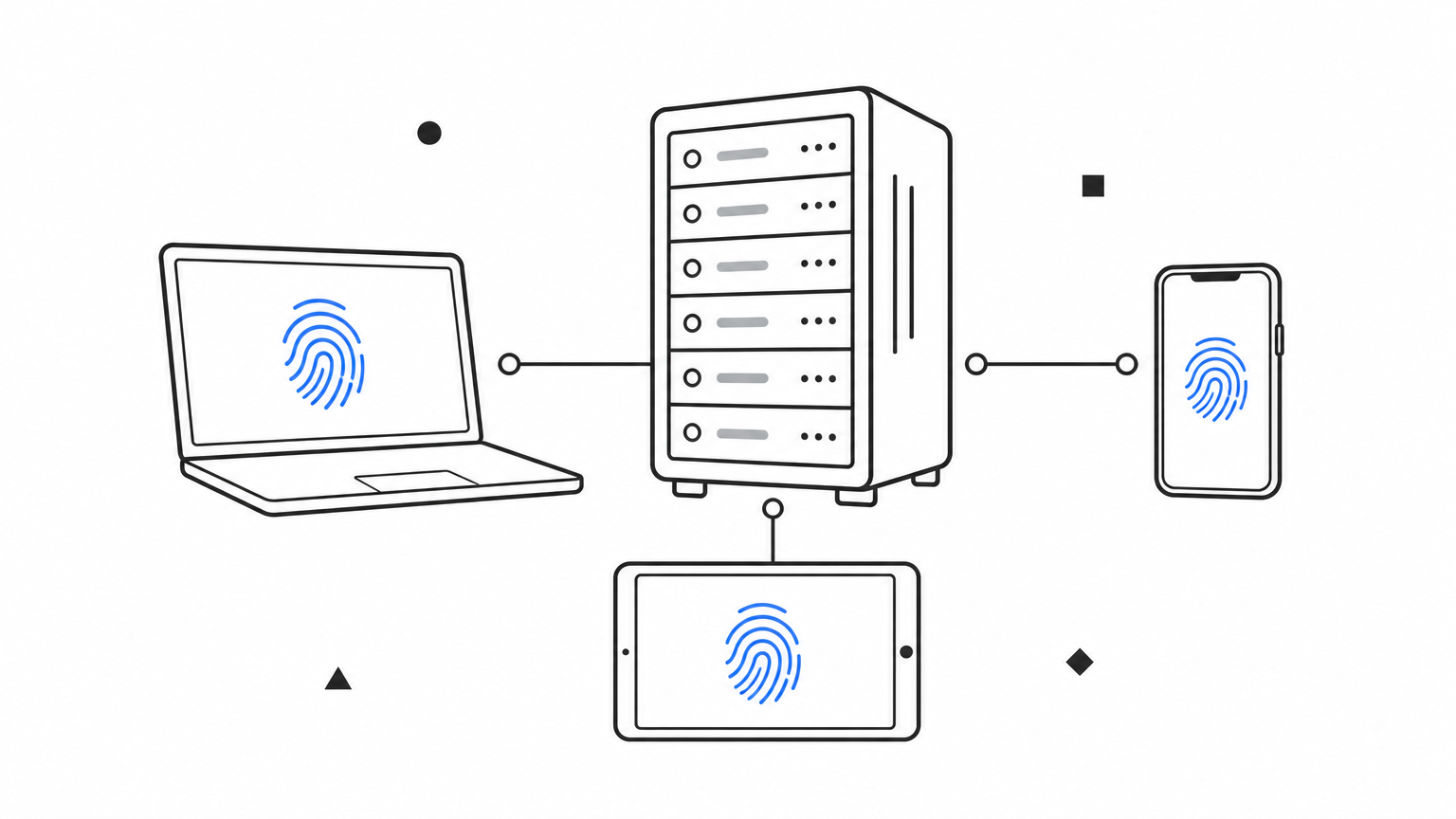
Imperva fits organizations that need bot protection across cloud and on-premises environments.
Imperva builds a detailed device fingerprint that looks beyond IP addresses and headers. Even if a bot changes location, the fingerprint lets you recognize it. You can then set rate limits per fingerprint, such as pages per minute, pages per session and session length, instead of per IP.
Deployment is flexible. You can connect it to Imperva's Cloud WAF, use connectors for AWS, Cloudflare, F5, NGINX and Fastly, or pair it with Imperva's on-premises WAF. It also covers account takeover protection and geo-IP blocking to cut foreign bot traffic.
Imperva suits large organizations with a mix of cloud and data center infrastructure and a team able to manage ongoing configuration. Companies that want CDN, WAF, DDoS and bot protection from one vendor will also find the stack appealing.
Pick it if:
Radware Bot Manager uses intent-based behavioral analysis to separate human visitors from automation. It is aimed at industries that attract heavy bot abuse, such as ecommerce and financial services.
Radware is strongest where bots are persistent and your security team can tune the product.
Instead of relying on signatures, Radware analyzes the intent behind a session and the way a visitor interacts with your pages. It adds device and browser fingerprinting to track clients that rotate IPs. Its mitigation is CAPTCHA-free, which avoids the friction that CAPTCHAs create for real customers.
Real-time threat monitoring and a business impact view help you show what bots cost. That is useful when you need budget approval from leaders who do not read security logs.
Radware suits ecommerce and fintech companies with dedicated security engineers and persistent bot problems such as credential stuffing and scraping.
Pick it if:
F5 Distributed Cloud Bot Defense is an advanced add-on to F5's WAAP service that protects web applications, mobile apps and APIs in real time. It is popular with retailers, banks, airlines and government agencies.
F5 makes the most sense when F5 already sits in front of your applications.
F5 offers hybrid deployment that you can run fully managed, self-service or as hybrid SaaS, across web and mobile. A mobile SDK covers native apps. It uses AI and machine learning to identify, block and redirect fraudulent traffic, including account takeover, credential stuffing, scraping and checkout abuse.
It has native support for Salesforce Commerce Cloud, and its signal data can flow into SIEM tools such as Splunk and Datadog. That lets security teams correlate bot events with the rest of their telemetry.
F5 suits large retail, finance and travel organizations that already use F5 and have security engineers to manage it. Salesforce Commerce Cloud stores with enterprise security teams are a particularly good match.
Pick it if:
Choose by matching three things: where bots hit you, who will run the tool, and how you will measure success. A tool that is excellent on paper but needs engineers you do not have will sit half-configured.
Pick the tool your team can actually operate, then prove it on real traffic before you sign.
Detection identifies automated traffic through behavioral analysis, fingerprinting, machine learning and reputation signals. Mitigation is what happens next: block, challenge, throttle, serve alternate content or feed fake data. Good products separate the two, so you can watch a bot score before you enforce anything.
These tools are services that sit in front of your site, not software you download and install. If you worry that your own PC is part of a botnet, that is an endpoint security question, and an antivirus or malware scan is the right tool. Free options exist for basic needs, such as Cloudflare's lighter bot controls and Turnstile, but they lack the scoring and reporting of paid products.
Score every candidate on these points:
| Tool | Best for | Deployment | Notable detection | Watch for |
|---|---|---|---|---|
| Nostra AI Knox | Shopify and Salesforce Commerce Cloud stores without engineers | DNS-level change, zero code | Blocks bad bots, allows verified crawlers | Built for storefronts |
| Cloudflare Bot Management | Teams already on Cloudflare | Reverse proxy | Machine learning, behavior, bot scores, Turnstile | Full product is enterprise tier |
| Akamai Bot Manager | Large enterprises on Akamai | Edge platform add-on | Three-range Bot Score, challenges, autotuning | Add-on and managed service costs |
| DataDome | Web, mobile and API coverage | Integrations with existing stack | Real-time classification, readable dashboard | Standalone, quote-based |
| HUMAN Security | Fraud-heavy businesses | Multiple enforcement points | AI and behavioral analysis | Pricing sensitivity to traffic |
| Imperva Advanced Bot Protection | Hybrid cloud and on-premises | Cloud WAF, connectors, on-prem | Device fingerprint rate limits | Setup complexity, add-on cost |
| Radware Bot Manager | Ecommerce and fintech with engineers | Cloud service | Intent-based analysis, CAPTCHA-free | Complex configuration |
| F5 Distributed Cloud Bot Defense | Existing F5 enterprises | Managed, self-service or hybrid | Mobile SDK, SIEM integration | Change coordination with support |
Take a DTC store with 1,000,000 monthly sessions, 150,000 of them bots (15%), and 20,000 orders. Reported conversion rate is 20,000 / 1,000,000 = 2.0%. Strip out the bots and it is 20,000 / 850,000, about 2.35%. Every decision based on the lower number, from landing page tests to channel budgets, starts from a distorted baseline.
Now add paid spend. If the store spends $100,000 a month on ads and 8% of clicks come from bots, that is $8,000 wasted each month, or $96,000 a year. These figures are illustrative, so replace them with your own analytics and ad platform data.
A store like this, on Shopify with no security engineers, should shortlist a low-lift tool first. Run it for two weeks, then compare sessions, conversion rate and cost per acquisition against the previous fortnight. A larger enterprise with a security team and mobile apps should shortlist two of the enterprise platforms and test both in monitor mode.
The right bot detection and mitigation software detects by behavior, keeps false positives low, covers the surfaces you actually expose and fits the people who will run it. Enterprise platforms such as Akamai, Imperva, Radware and F5 reward teams with security engineers. Cloudflare rewards teams already on its network. DataDome and HUMAN reward teams with web, mobile, API or fraud exposure.
If you run a Shopify or Salesforce Commerce Cloud store and want clean traffic without an engineering project, see how Edge Protect filters bad bots before they reach your store. The 14-day free trial lets you check your own analytics before you commit.


