.svg)
.svg)
.svg)
.svg)
Published April 22, 2026 · 8 min read
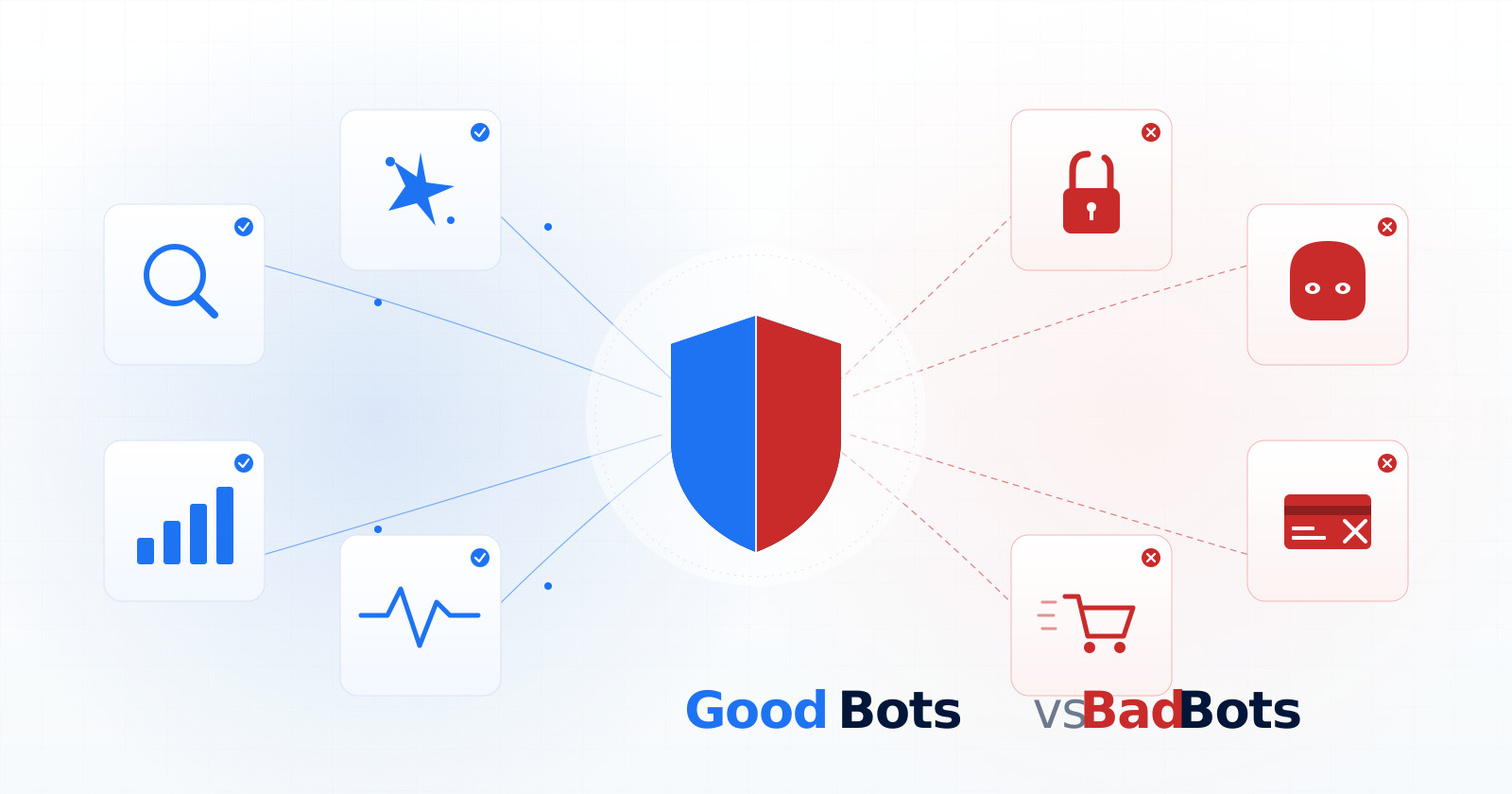
Quick answer: Good bots vs bad bots is the difference between traffic that creates value for your Shopify store (search engine crawlers, AI crawlers like ClaudeBot and GPTBot, uptime monitors) and traffic that extracts value from it (price scrapers, credential stuffers, carding bots, click-fraud bots, inventory hoarders). The right strategy is not to block all bots, it is to verify and allow the good ones while blocking the bad ones at the edge before they reach your origin.
Here is a statistic that should make every Shopify merchant sit up: in 2025, more than half of all traffic hitting ecommerce sites came from bots, not humans. Some of those bots were necessary, they help your store appear in Google, get cited by ChatGPT, and monitor uptime. Others were actively destroying margin, scraping prices, stuffing stolen credentials into login forms, clicking your paid ads, and hoarding limited-release inventory. The difference between a brand that thrives and a brand that bleeds revenue is not "how much bot traffic do you have"... it is good bots vs bad bots, and whether you can tell them apart.
Most bot-protection advice falls into one of two unhelpful camps: "block all bots" (which kills your SEO and AI visibility) or "let them through, bots are not a big deal" (which costs you money every day). The right answer is in the middle: let the good bots in, keep the bad bots out, and know the difference. This guide walks you through both categories, explains how modern AI crawler bots like ClaudeBot and GPTBot fit into the picture, and shows how Shopify brands in 2026 are making the distinction in real time. (If you want to see how badly bot traffic is already hurting your store, our guide on whether bot traffic is killing your Shopify speed and conversions is a useful starting point.)
Why "Block All Bots" Is the Wrong Strategy in 2026
Five years ago, a blanket "deny bots" rule in your CDN was a reasonable starting point. It is not anymore. Three things changed.
First, search discovery fragmented. Shoppers no longer rely on Google alone. They ask ChatGPT what beauty brand to buy, they ask Perplexity to compare running shoes, and they tap Google's AI Overviews that blend human results with machine-generated summaries. Each of those surfaces is powered by a crawler that needs to reach your store. Block the crawler, and you disappear from the answer.
Second, the good-bot ecosystem got bigger. Uptime monitors, accessibility scanners, analytics validators, affiliate trackers, and partner integrations all use automated requests. If your "block all bots" rule catches them, real parts of your business break, silently, in ways you only notice weeks later when a dashboard shows a suspicious flat line.
Third, the bad-bot ecosystem got more sophisticated. Modern malicious bots rotate residential IPs, spoof real browser fingerprints, and mimic human mouse movement. Any rule simple enough to block "all bots" is too blunt to catch the bots that actually hurt you. You end up blocking Googlebot by accident and letting a credential-stuffing botnet through on the same policy. The goal for 2026 is not less bot traffic. It is smarter bot traffic. And because bot traffic isn't evenly distributed, the pages that matter most to your business take the worst of the damage.
What Makes a Bot "Good"?
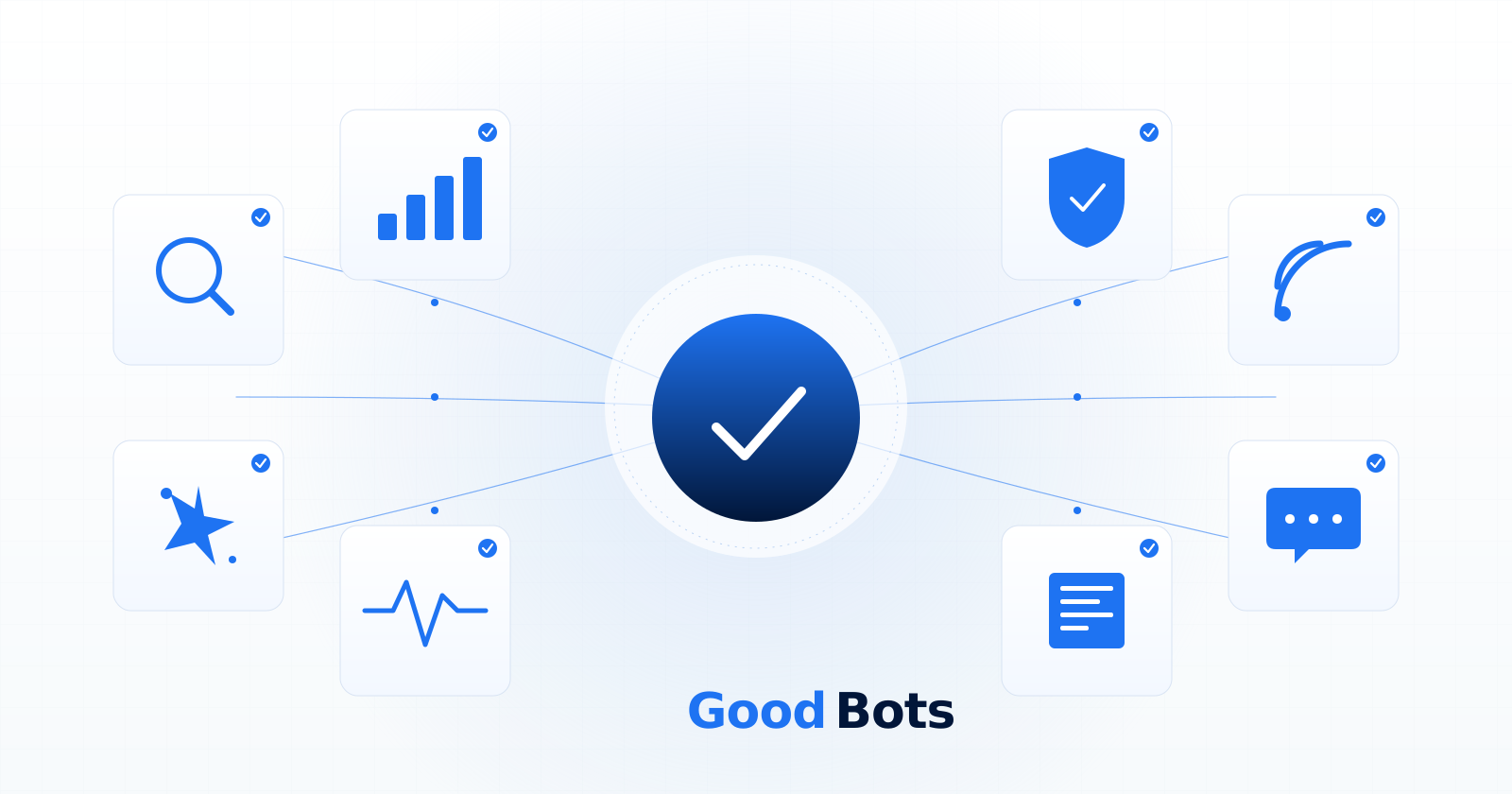
A "good" bot is one whose activity creates value for your store directly, or by making your store discoverable, measurable, or stable. Most fall into four groups.
Search engine crawlers. Googlebot, Bingbot, DuckDuckBot, and Yandex bots index your site so shoppers can find it. These bots are well-documented, identify themselves clearly in the user agent, and respect your robots.txt. Blocking them is a direct cut to your organic traffic, and it is the most common reason merchants wake up to unexplained SEO declines. Rule of thumb: if a bot is associated with a major search engine and verifies through reverse DNS, it should almost always be allowed.
AI crawlers and answer engines. This is the newest good-bot category and the most controversial. ClaudeBot (Anthropic), GPTBot and OAI-SearchBot (OpenAI), PerplexityBot, Google-Extended, and Applebot-Extended all exist to feed content into models that answer shopper questions. When someone asks Claude "what's the best organic skincare brand for sensitive skin?" and your product comes up, it's because ClaudeBot crawled your content earlier. These bots are good for discovery, but they raise real questions about IP, bandwidth, and whether you want your content used to train competitors, we tackle that in a dedicated section below.
Monitoring and observability bots. Uptime tools (Pingdom, StatusCake, UptimeRobot), performance monitors, accessibility crawlers, contracted security scanners, and synthetic transaction testers all hit your site constantly. They are how you know your store is alive at 3 a.m. on a Sunday. Blocking them means flying blind on reliability.
Partner and integration bots. Affiliate networks, review aggregators, Google Shopping feed validators, Meta catalog crawlers, and your platform's own internal bots all need access. Break these and you break pricing accuracy on partner sites, ad-feed approvals, and attribution pixels.
A good bot is usually identifiable. It declares itself in the user agent, often publishes an IP range or reverse-DNS verification method, and respects rate limits and robots.txt directives. When something is trying hard to look like a real user rather than identify itself as a bot, that's usually a signal it is not a good bot.
What Makes a Bot "Bad"?
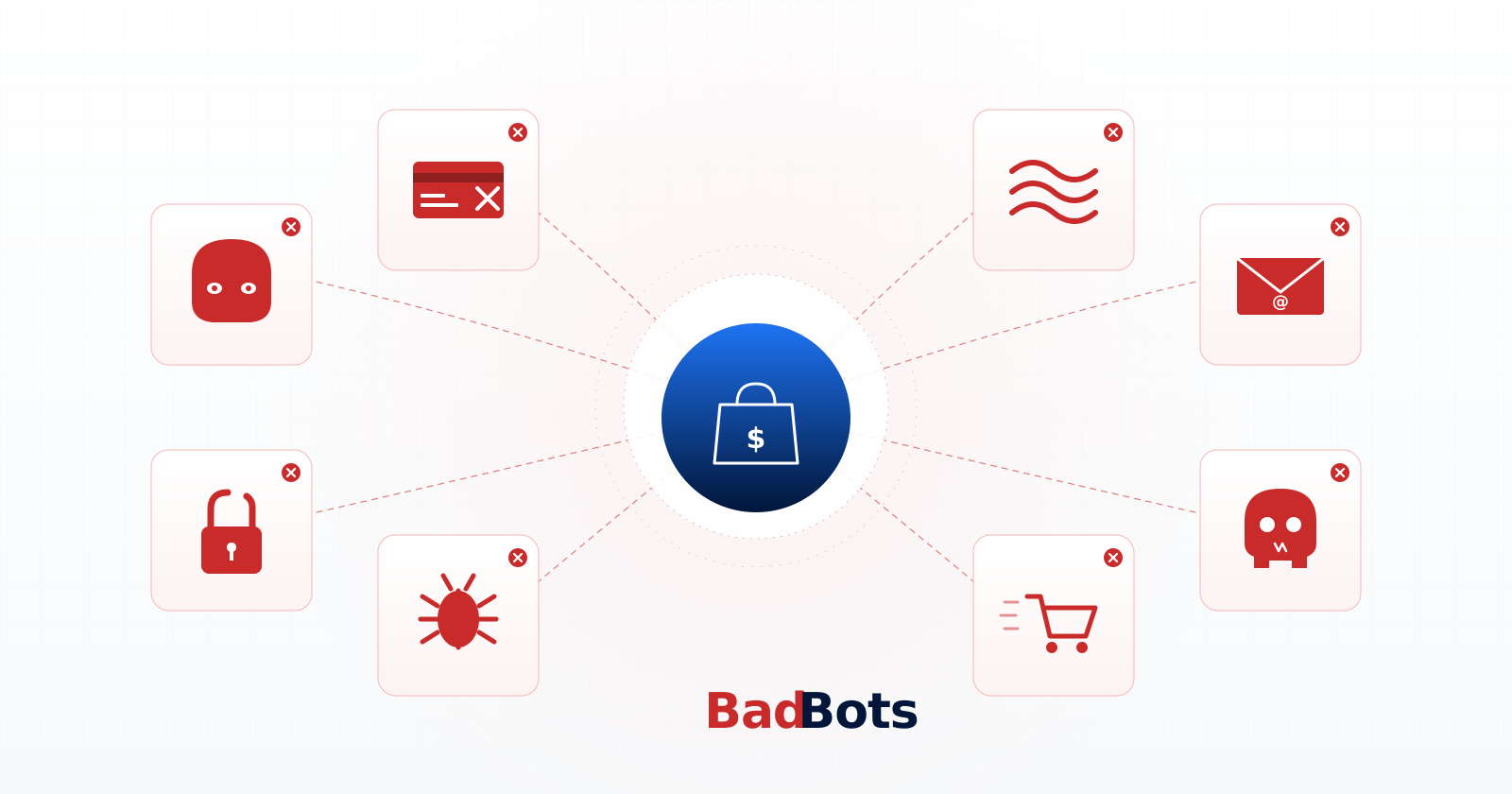
Bad bots extract value from your store without returning any. They come in more flavors than most merchants realize, and each type hits a different part of the business.
Price scrapers. Competitors and resellers scrape your product catalog, prices, and inventory levels to undercut you on Amazon, Google Shopping, and their own stores.
Content and image scrapers. These bots vacuum up your product photography, copy, and lifestyle imagery to build knockoff sites, dropship storefronts, or SEO doorway pages.
Credential-stuffing bots. Botnets try stolen username/password pairs from other breached databases against your login form. Every match is a takeover that can lead to fraudulent orders, loyalty-point theft, or leaked saved payment methods.
Carding bots. These hit your checkout with stolen card numbers to test which ones are live. You see them as a spike in failed transactions, chargebacks, and gateway fraud alerts.
Inventory-hoarding and sneaker bots. On limited drops, these add product to cart faster than any human can, tie up stock, and either resell at a markup or abandon the cart after blocking legitimate buyers.
Click-fraud and ad-scraping bots. These inflate your CPC, tank your conversion rate in reporting, and skew every optimization decision your ad platform makes.
Form-spam and lead-poisoning bots. These poison your CRM, waste your SDR team's time, and get your sending domain flagged as a spammer.
Analytics-skewing bots. Even non-hostile bots pollute your GA4 and RUM data, destroying your conversion-rate benchmarks.
Every bad-bot category shares a pattern: they try to look human enough to get through basic filters, and they concentrate on high-value pages, login, checkout, PDPs for popular SKUs, and your ads.
The AI Crawler Dilemma: Should You Block ClaudeBot and GPTBot?
This is the question most Shopify brands are actively wrestling with in 2026, and the answer is less obvious than either side of the debate suggests.
Crawlers vs Agents: Two Different Problems
Before we go further, it's worth drawing a line between two things that often get lumped together. They behave differently and need different policies.
AI crawlers like ClaudeBot, GPTBot, OAI-SearchBot, PerplexityBot, and Google-Extended are Anthropic's, OpenAI's, Perplexity's, and Google's own web crawlers. They publish IP ranges, identify themselves in the user agent, respect robots.txt, and fetch pages in bulk to feed search indexes or model training. From a bot-management perspective, these are clean to verify and easy to rate-limit.
AI agents are different. When a shopper uses Claude in Chrome, ChatGPT's agent, or an AI-powered browsing assistant to open your product page on their behalf, that traffic is initiated by a real human but executed by software. It runs on shared Anthropic or OpenAI infrastructure, which means you cannot tell one customer's Claude session apart from another customer's Claude session, the IPs and fingerprints are shared by everyone using the service. You can choose to allow all AI-agent traffic through, or block all of it, but you cannot currently allow "my brand's Claude agent" and block a competitor's Claude agent, because they share the same underlying infrastructure.
That matters in two ways. First, allowing AI agents through increases the chance that a small amount of scraping sneaks in during that open window, since bad actors could theoretically route scraping through an agent service. The impact is usually modest, but it isn't zero. Second, the policy decision is binary per agent service, "allow all Claude agents" or "block all Claude agents", rather than per customer. Brands should make that call with eyes open, and revisit it as agentic browsing grows.
The rest of this section is about the bulk crawlers, where verification is clean and the allow/block decision is more straightforward.
The case for allowing AI crawlers like ClaudeBot, GPTBot, PerplexityBot, and Google-Extended is straightforward: AI assistants are an increasingly important discovery surface. A beauty brand cited by Claude when a user asks for recommendations is winning a placement that didn't exist three years ago. If this angle matters to your team, our post on Answer Engine Optimization goes deeper.
The case for blocking them is also reasonable. AI training uses your content without sending you traffic the way a traditional referral link does. Your product photos, copy, and reviews may be used to fine-tune a model that competitors also benefit from. And the volume can be significant, AI crawlers visit frequently and fetch pages in bulk, which shows up on your bandwidth bill and your TTFB graphs.
The practical answer for most Shopify brands is to segment the decision. Allow AI crawlers that drive real discovery, ClaudeBot, OAI-SearchBot, and PerplexityBot, because they generate citations back to your site. Be more cautious with training-only crawlers like GPTBot and Google-Extended, which feed model training but do not always send traffic back. Rate-limit aggressively across all of them, and set robots.txt directives that match your policy so there is no ambiguity. Above all, make the decision on purpose, the worst outcome is blocking all AI crawlers by accident while leaving credential stuffers and carders wide open.
How Modern Bot Management for Ecommerce Separates Good from Bad
The brands winning at bot management for ecommerce in 2026 are using a layered approach rather than a single rule.
Verify, don't trust. A user agent that says "Googlebot" means nothing — anyone can set a user agent. Real Googlebot verifies through reverse DNS on googlebot.com. Real ClaudeBot publishes an IP range. Real Bingbot verifies through search.msn.com. A modern bot-management layer verifies automatically and allows only the actual verified crawlers.
Fingerprint behavior, not just headers. Good bots behave predictably, steady crawl rates, respect for robots.txt, reasonable backoff on errors. Bad bots behave suspiciously, bursts of requests to checkout and login endpoints, missing or fake browser fingerprints, impossibly fast page-to-page navigation, and traffic from residential proxy pools. Behavioral fingerprinting catches bots that spoof headers well enough to fool a static rule.
Protect the endpoints that matter. Your homepage can absorb a lot of bot traffic. Your login form, checkout, and add-to-cart cannot. Modern bot management applies stricter rules to the high-value endpoints that bad bots target, while keeping public content relatively open for legitimate crawlers.
Separate "block" from "challenge" from "allow with limits." A sophisticated strategy rarely uses a binary block/allow switch. Verified good bots are allowed with rate limits. Suspicious traffic is challenged. Known bad traffic is blocked outright. Uncertain traffic is fingerprinted and watched. This graduated response is what separates "bot protection" from "angry firewall."
Feed the analytics layer the truth. A huge secondary benefit of good bot management is clean data. Once bot traffic is identified, your GA4, RUM, and ad-platform data reflect real humans only, which means your CVR, CAC, and performance benchmarks are finally trustworthy.
FAQ: Good Bots vs Bad Bots
What is the difference between good bots and bad bots?
Good bots create value — search engine crawlers like Googlebot, AI crawlers like ClaudeBot and GPTBot, uptime monitors, and partner integrations. Bad bots extract value without giving any back: price scrapers, credential stuffers, carding bots, inventory hoarders, click-fraud bots, and content thieves.
Should I block ClaudeBot and GPTBot on my Shopify store?
For most Shopify brands, allow AI crawlers that drive discovery (ClaudeBot, OAI-SearchBot, PerplexityBot) because they generate citations when shoppers ask AI assistants for recommendations. Be more cautious with training-only crawlers like GPTBot and Google-Extended. Always rate-limit and declare your policy in robots.txt.
How much of my Shopify traffic is actually bots?
In 2025 and 2026, more than half of all traffic hitting ecommerce sites is automated. Most high-traffic Shopify stores see 40–60% bot traffic on a typical day, with spikes much higher during product drops and peak holiday periods.
Will blocking bots hurt my SEO?
Only if you block the wrong ones. Blocking verified Googlebot, Bingbot, and other search crawlers will hurt organic rankings. Blocking bad bots — scrapers, credential stuffers, click-fraud bots — has no SEO impact and usually improves performance.
How do I tell if a bot claiming to be Googlebot is real?
Real Googlebot verifies through reverse DNS on googlebot.com. Run a reverse DNS lookup on the IP, then a forward DNS lookup on the hostname, and confirm it resolves back to the original IP. Header inspection alone is not reliable.
How do I tell if my Shopify store traffic is bots or real customers? Compare analytics sessions against backend orders: if sessions spike while orders stay flat, bounce rate jumps, or traffic arrives from unusual regions at odd hours, automation is the likely cause. Behavioral analysis at the edge can classify each session in real time — see the most common Shopify bot symptoms for what to look for.
What is the best bot protection for Shopify? It depends on how sophisticated your bot traffic is and whether you can tolerate any speed penalty. We compared the leading options — Nostra vs Cloudflare vs DataDome vs Blockify — on detection quality, speed impact, and setup effort.
How do I stop card testing bots on Shopify checkout? Card testing has to be stopped before checkout is reached. Edge-level filtering blocks the offending sessions upstream, while app-level tools only react once the request is already on your store. Our complete guide to stopping bot traffic on Shopify covers the playbook step by step.
Ready to Block the Bad Bots and Let the Good Ones Through?
Nostra Edge Protect is purpose-built for this exact problem. It runs at the edge, in front of your Shopify store, and makes the good-vs-bad decision on every single request — in milliseconds, without adding latency for real shoppers. Verified search engine crawlers and AI crawlers like ClaudeBot, GPTBot, and PerplexityBot pass through with appropriate rate limits so you stay visible in search and AI answers. Credential stuffers, scrapers, carders, and click-fraud bots are blocked before they ever touch your origin.
The result: faster load times for real shoppers, clean data your team can actually trust, fewer chargebacks, and a store that shows up in every search surface that matters — Google, Bing, ChatGPT, Claude, Perplexity, and whatever comes next.
Learn more about Nostra Edge Protect, or see how Nostra solves bot problems for Shopify brands, or book a demo to see how much of your traffic is actually bots — and which ones are costing you the most.


