People now ask ChatGPT, Perplexity, and Google's AI Overviews what to buy, and those tools answer with a short list of brands. If yours is not on it, you never get the click. That is the problem generative engine optimization how to dominate ai search tries to solve, and it works differently from the SEO playbook you already know.
Here is the short answer. Generative engine optimization (GEO) is the practice of structuring your content so AI engines can find it, trust it, and cite it. The research behind it found that adding citations, quotes, and statistics to a page raised its visibility in AI answers, while keyword stuffing did little. Strong SEO still matters, because AI engines pull from pages that already rank and load well.
This guide walks through what the research found and how to apply it to a store. You will learn how to write citable product and category content, how to check which AI crawlers actually visit your site, and why speed and clean bot data matter. At Nostra AI, we see this traffic across 300+ ecommerce brands, so the steps come from real storefronts.
GEO is the practice of getting your content cited inside an AI-generated answer instead of listed as one of ten blue links. Search engines rank pages. Generative engines read several pages, write one response, and credit a few sources. Your goal shifts from position to inclusion.
Traditional SEO still feeds this process. AI engines retrieve from indexed pages first, so crawlability and solid rankings remain the entry ticket. GEO adds a second layer: how your content reads once the model has it.
Researchers from Princeton, Georgia Tech, the Allen Institute for AI, and IIT Delhi built a benchmark of 10,000 queries. They tested nine content changes on generative engines, including Perplexity, and measured how much each page contributed to the final answer. The four results below matter most for a store.
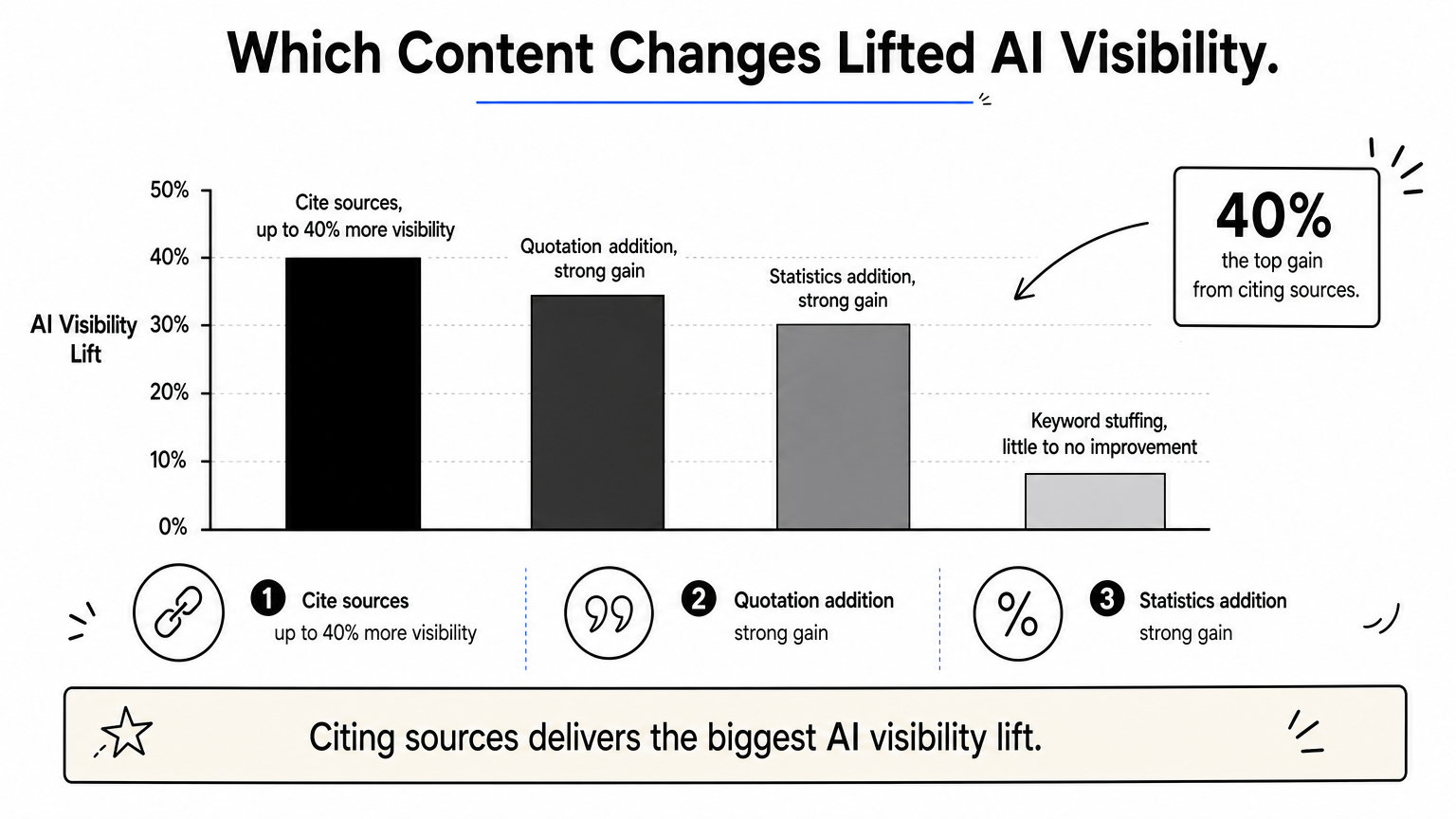
| Tactic | What you change | Result |
|---|---|---|
| Cite sources | Reference credible, named sources | Among the top performers, up to 40% more visibility |
| Quotation addition | Add quotes from named experts or customers | Strong gain |
| Statistics addition | Replace vague claims with specific numbers | Strong gain |
| Keyword stuffing | Repeat the target phrase | Little to no improvement |
The old SEO habit of repeating a phrase barely moved the needle. Evidence, attribution, and numbers did.
Generative engines reward pages that are easy to verify, not pages that repeat a keyword the most.
Lower-ranked sites gained the most. In one test, citing sources lifted a fifth-ranked site by about 115% while trimming the top result by roughly 30%. If a bigger competitor outranks you in Google, GEO gives you a real way to appear in the answer anyway.
Keep one caveat in mind. This was a controlled study, and live AI engines change often. Treat the numbers as a reliable direction, not a promised lift, and plan to test on your own pages. Step 4 covers how.
No content tactic works if AI engines cannot reach your pages. Many stores block them by accident through a bot rule added years ago. Start by opening your robots.txt file and checking what it says.
Training crawlers and answer crawlers are different. Allow the ones that fetch pages for live responses, such as OAI-SearchBot, ChatGPT-User, and PerplexityBot. You can still block training-only bots like GPTBot if your legal team prefers. Google's robots.txt documentation covers the syntax, and AI Overviews draw on Googlebot's index, so keep Googlebot allowed too.
User-agent: OAI-SearchBot
Allow: /

User-agent: ChatGPT-User
Allow: /

User-agent: PerplexityBot
Allow: /
A permissive robots.txt proves nothing on its own. Search your server logs or CDN reports for those user agents and look for 403 responses. Bot-protection rules often block unfamiliar crawlers by default, so a firewall can undo your robots.txt.
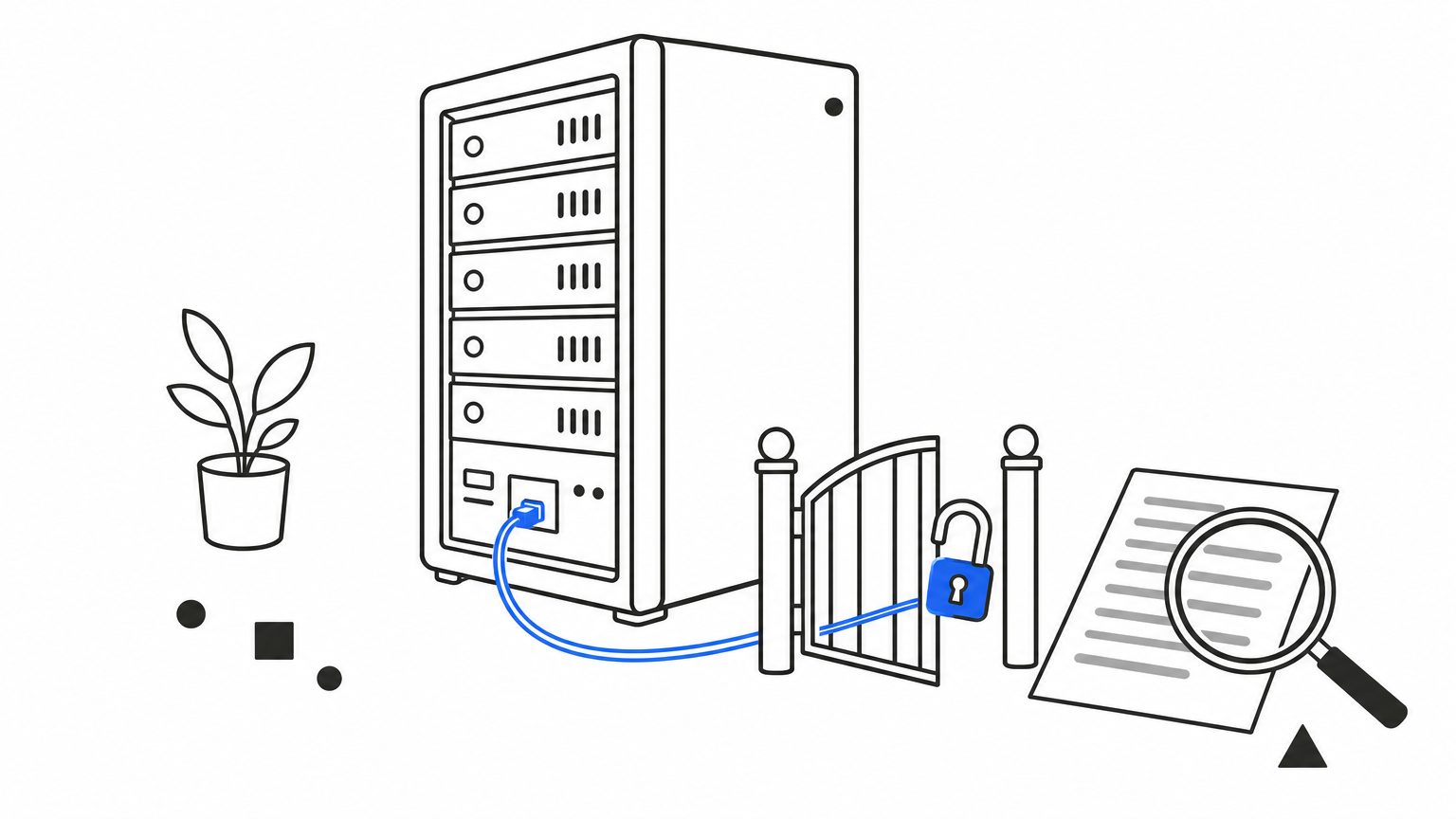
A crawler you block by accident can never cite you.
Also expect spoofing. Anyone can fake a user agent string, so verify crawlers by IP range before you trust your numbers. Sherlock, our AI discovery agent, does this verification automatically and separates real AI crawlers from impostors, so you can open the door to the first group without welcoming the second.
Put a direct answer in the first two sentences of every product and category page. Then swap vague claims for specific numbers. "Gentle formula" becomes "pH 5.5, fragrance-free, tested on 120 sensitive-skin users." This is where generative engine optimization pays off, because the research rewarded exactly this kind of evidence.
A claim that still makes sense when quoted alone is a claim an AI engine can cite.
Apply this checklist to your top 20 pages:
Markup tells machines what each element on the page is. Use schema.org Product, FAQPage, and Review types in JSON-LD, and follow Google's structured data guidelines. Keep the markup identical to the visible text, because mismatches erode trust.
Finally, check that your key text appears in the initial HTML. Many AI crawlers do not run JavaScript, so a description injected by a script may be invisible to them. View the page source, search for your main claim, and fix anything missing.
AI engines do not take your word for it. They weigh what other sites say about you, so third-party mentions often count for more than your own copy. Ask ChatGPT and Perplexity for the best product in your category, then note which pages they cite. Those are your target publications.
Then work the list, starting with the highest-authority sites:
Earned mentions teach AI engines who to trust, and your own pages cannot do that alone.
Consistency matters too. Use the same brand and product names everywhere. If one site writes "Acme Skin" and another writes "AcmeSkin Co.", a model may treat them as two separate entities. Publish an About page with clear facts, and add Organization schema with sameAs links to your official profiles. Good generative engine optimization depends on this kind of entity clarity.
Pick 20 questions your shoppers would ask an AI engine, then run them monthly in ChatGPT, Perplexity, and Google AI Overviews. Log every result in a spreadsheet so you can compare month to month. Answers vary between runs, so ask each prompt three times and record the pattern.

| Column | What to record |
|---|---|
| Prompt | The exact question |
| Mentioned | Yes or no |
| Cited | Your URL, if linked |
| Competitors | Brands named instead of you |
Referral data comes next. In GA4, filter sessions by source for chatgpt.com, perplexity.ai, and gemini.google.com. Expect an undercount, because many AI visits arrive with no referrer. Crawler logs fill the gap, and Sherlock reports verified AI bot activity by page. Clean data matters here too. Knox blocks malicious bots, so fake sessions do not inflate the numbers you are judging.
Treat GEO like a landing page test. Update five pages with new statistics and citations, leave five similar pages untouched, and re-run your prompts after four weeks. Keep the changes that moved mentions, then repeat them on the next batch of pages.
What you do not measure in AI answers, you cannot improve.
Start small. Generative engine optimization comes down to four moves: let real AI crawlers in, write claims that are easy to cite, earn mentions on sites AI engines trust, and measure what happens. Pick your 20 highest-traffic pages, fix your robots.txt and firewall rules this week, then add statistics, sources, and named quotes to those pages. That is how you start to dominate AI search without rebuilding your site.
Every step also depends on clean traffic data. If fake sessions inflate your numbers, you cannot tell which changes actually worked. You can block bad bots before they distort your analytics with Edge Protect, so you protect ad spend and judge your AI visibility on real shoppers only.


.svg)
