Ad fraud bots are automated programs that fake the clicks, views, installs, or form fills that advertisers pay for. You get billed, a scammer or fraudulent publisher collects the revenue, and no real customer ever saw your ad. Some are crude scripts. The worst are networks of hijacked devices that browse, watch videos, and even add items to carts.
Not every bot is bad. Googlebot and AI assistants crawl your store for legitimate reasons, and those visits are not fraud. This article separates the two, then covers why fraud bots hurt, the main types, how to spot them in your own data, and how to protect your spend.
Nostra AI runs bot protection at the edge of ecommerce storefronts and turns away more than 10 billion bots a year across its brands.
Fake traffic costs you twice. You pay for the fraudulent click or impression, and then you make decisions from data that bots have polluted.
Published estimates vary by method, and many come from vendors who sell protection, so read them as a range. They still point the same way:
Apply the click figure to a typical account. At $20,000 a month in Google Ads, an 11.5% invalid rate puts $2,300 a month at risk, or $27,600 a year. Google filters and credits some invalid clicks, so your real loss may be lower, but no platform catches everything.
The invoice is the smaller problem. Bots inflate sessions, distort click-through rate, break attribution, and ruin A/B tests. Retargeting audiences fill with non-humans, and ad algorithms learn to find more of the traffic that never converts. You end up optimizing toward fake demand while real shoppers get less budget.
People often ask whether half of internet traffic is bots. Thales' 2026 Bad Bot Report found that bots made up 53% of internet traffic in 2025, and 40% of all traffic was malicious. So the claim is roughly right, but only the malicious share is the fraud problem here.
Every fake click is billed like a real one, and every fake session teaches your tools the wrong lesson.
Ad bots, meaning bots that interact with ads or the pages behind them, fall into five practical groups. They differ in what they fake and where the damage shows up.
| Type | What it fakes | Where you feel it |
|---|---|---|
| Click bots | Clicks on paid ads with no buyer interest | PPC budgets, click-through rate |
| Impression and hidden-ad bots | Views, including ads stacked or hidden so no human sees them | CPM spend on impression-based buys |
| Botnet bots | Browsing from infected devices, each with its own IP address | Passes simple IP filters, pollutes traffic and audiences |
| Retargeting bots | Interest in a brand or product, to be placed in valuable audiences | Inflated CPMs, wasted retargeting spend |
| Lead and form bots | Form submissions, sometimes with real people's details | CRM quality, sales time, consent risk |
Two related schemes are worth knowing. Click hijacking redirects a real click on one ad so it counts for another, and it requires compromising a device, a publisher site, or a proxy. Fake app installs are usually driven by click farms, which are low-paid workers rather than software, so they are fraud but not strictly bots.
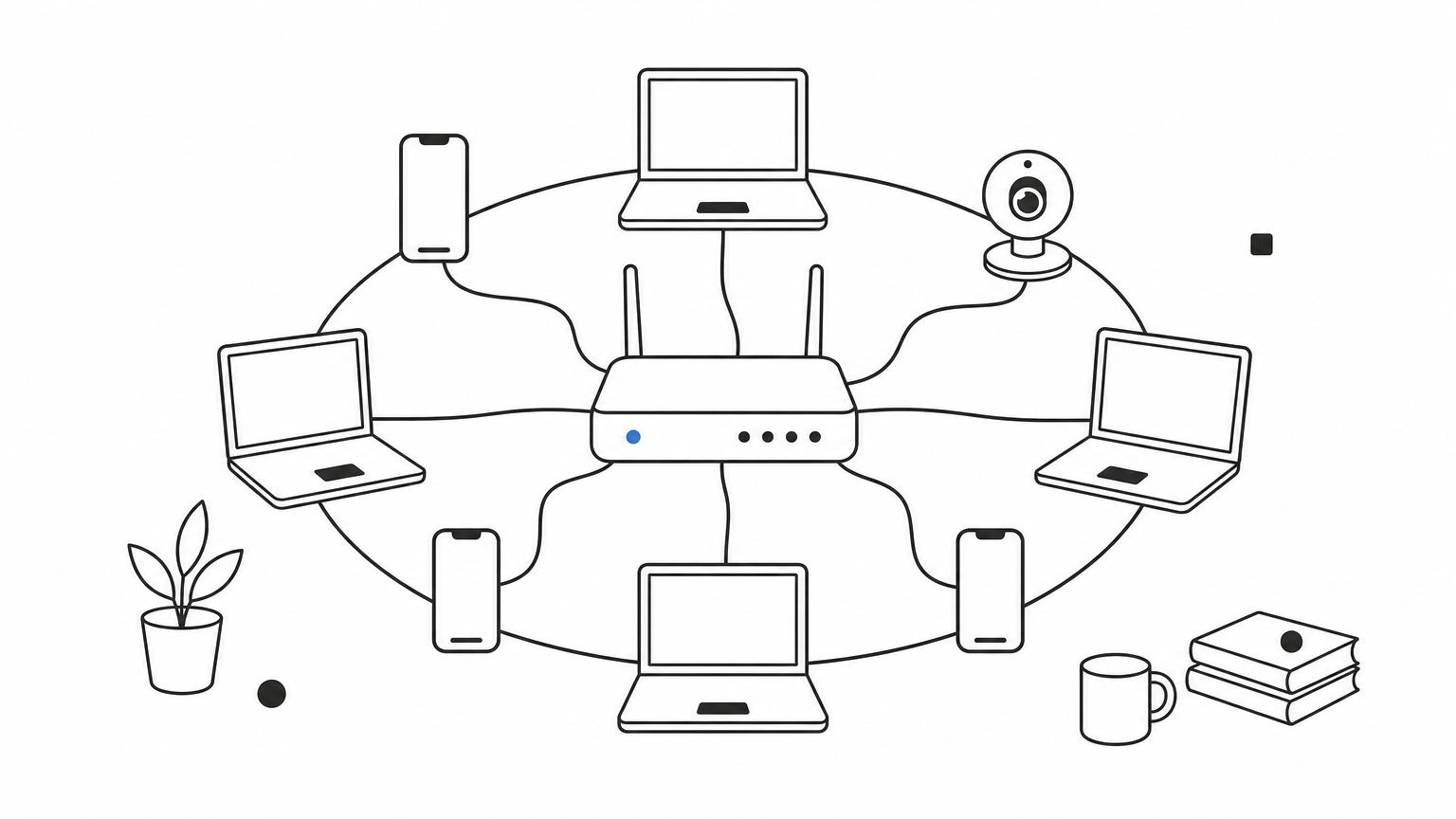
A botnet is a group of compromised devices that a single operator controls. Because each device has its own IP address and a real browser, the traffic looks like thousands of unrelated visitors. The most advanced ones click from site to site, watch videos for their full length, and add products to baskets.
The bot's goal can also change. A bot that starts as malware can switch to ad fraud within hours or days. That is why one static rule, such as blocking a list of IPs, ages quickly. Detection works better when it scores behavior across several signals at once.
Running click bots to earn publisher revenue or to drain a rival's budget is fraud, and every major ad platform bans it in its terms. Whether it is also a criminal or civil matter depends on the jurisdiction and the facts, so talk to a lawyer before you act on a specific case.
If you suspect a competitor, document the evidence and report it to the ad platform. Do not retaliate with your own traffic.
Most ad fraud bots succeed not because they are clever, but because they look like many different people.
Start by comparing what the ad platform bills with what your site and orders show. Real audiences leave consistent traces. Bots leave gaps.
Watch for these patterns, especially when several appear together:
Some click-to-session gap is normal, because people close pages before they load. The signal is a gap that concentrates in one campaign, placement, or country.
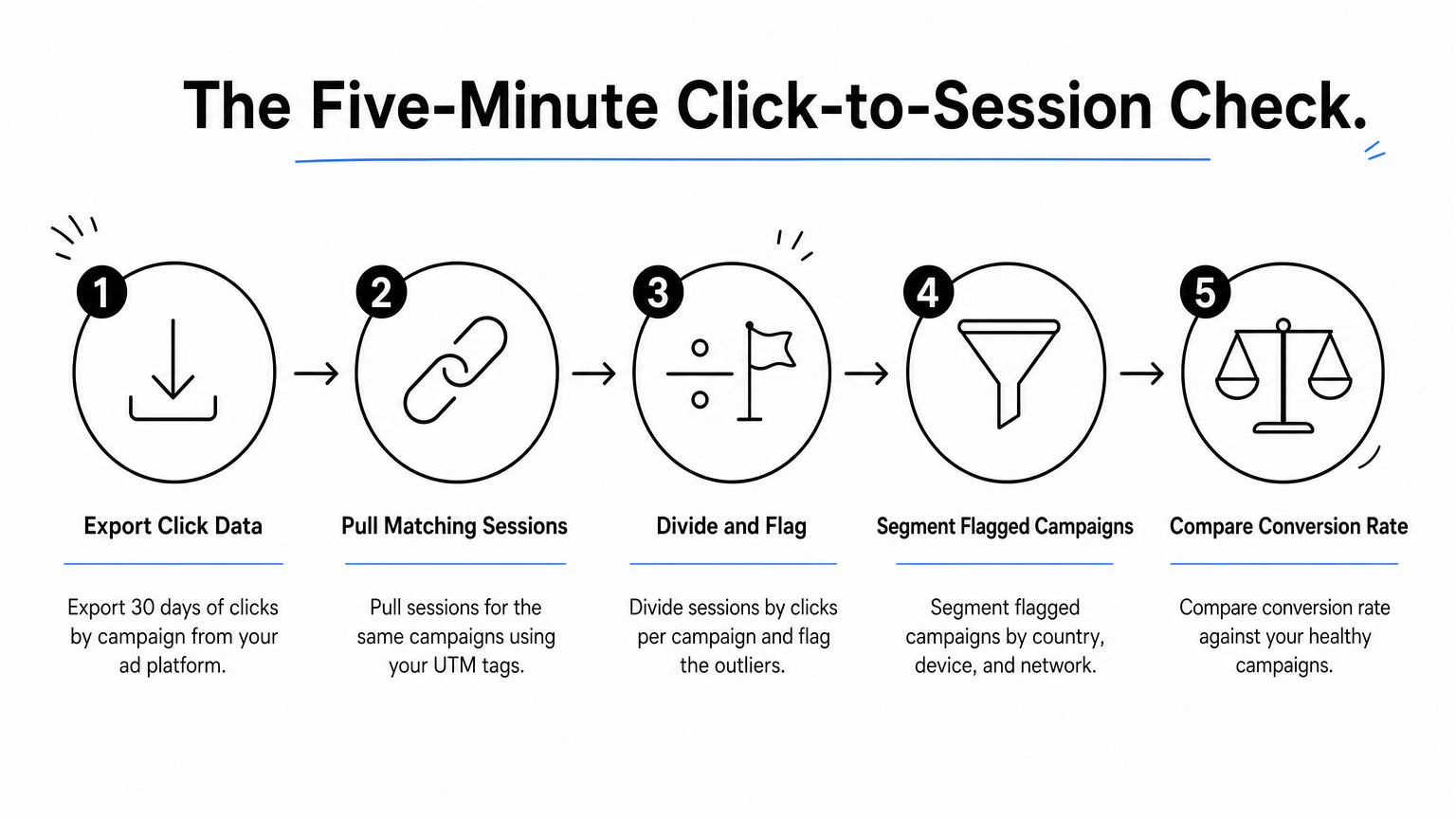
A campaign with ordinary spend, a low session ratio, and zero conversions from one country is where to look first.
The tell is rarely one number. It is a campaign whose clicks, sessions, and orders stop telling the same story.
Protection works in layers. Tighten what you buy, use the platform's own filters, and block bots at the edge before they reach your store.
Exclude placements and geographies that produce junk, and turn off partner or display networks on campaigns that do not need them. Review invalid-click credits in your ad platform and dispute charges with your session data as evidence. These steps are free, but they only act after the click has been paid for.
Edge Protect (Knox) filters bot traffic in real time before it reaches your storefront, so bots do not distort your analytics, pixels, or audiences. It uses behavioral AI, deploys with a DNS-level change, and needs no engineering work. It lets good bots such as Googlebot, ChatGPT, and Claude through, so SEO and AI search crawlers are not affected.
Two examples show the scale. Nixon cut daily bot sessions by roughly 90% within hours, and U Beauty eliminated 95% of malicious bot traffic without touching code. Knox also sends live alerts when an attack starts and pinpoints where bot traffic comes from. Use that source data to feed your exclusion lists, so you stop buying the same traffic again. Plans start at $99/month, priced on monthly site sessions, with a 14-day free trial.
Edge filtering is not a refund for clicks already billed. Its value is clean data and a smaller bot footprint on your site, which is what lets you trust your conversion numbers again.
Layer your defenses: cut bad sources upstream, and block bots at the edge so they never touch your data.
Ad fraud bots fake the actions you pay for, and they cost you through both the invoice and the decisions you make from corrupted data. The five types in the table cover most of what you will meet. A simple click-to-session check will show you where to look, and layered defenses will keep the problem small.
If you want the filtering layer handled for you, see how Edge Protect filters bad bots in real time before they reach your site and your ad data.


