You have probably asked ChatGPT or Perplexity about your own category and wondered why a competitor showed up and you did not. Rankings no longer tell the whole story. If you are asking which generative engine optimization is best for AI search, you need one of the best AI search engine optimization tools for 2026 to show where your brand appears in AI answers and what to change.
The short answer: the best platform depends on what you need to do. Visibility tracking suits teams that want prompt-level reporting across ChatGPT, Perplexity, and Google AI. Content and citation guidance suits teams with writers ready to act. For ecommerce, there is a third piece most tools skip: verified AI crawler data from your own storefront.
Below, you will find 10 of the top generative engine optimization platforms for AI search results, a shortlist drawn from the wider field of AI visibility software for GEO. For each one, we cover what it tracks, who it fits, and where it falls short. We also explain how Nostra AI's Sherlock agent identifies real AI bot traffic on your store and feeds clean data into these tools.
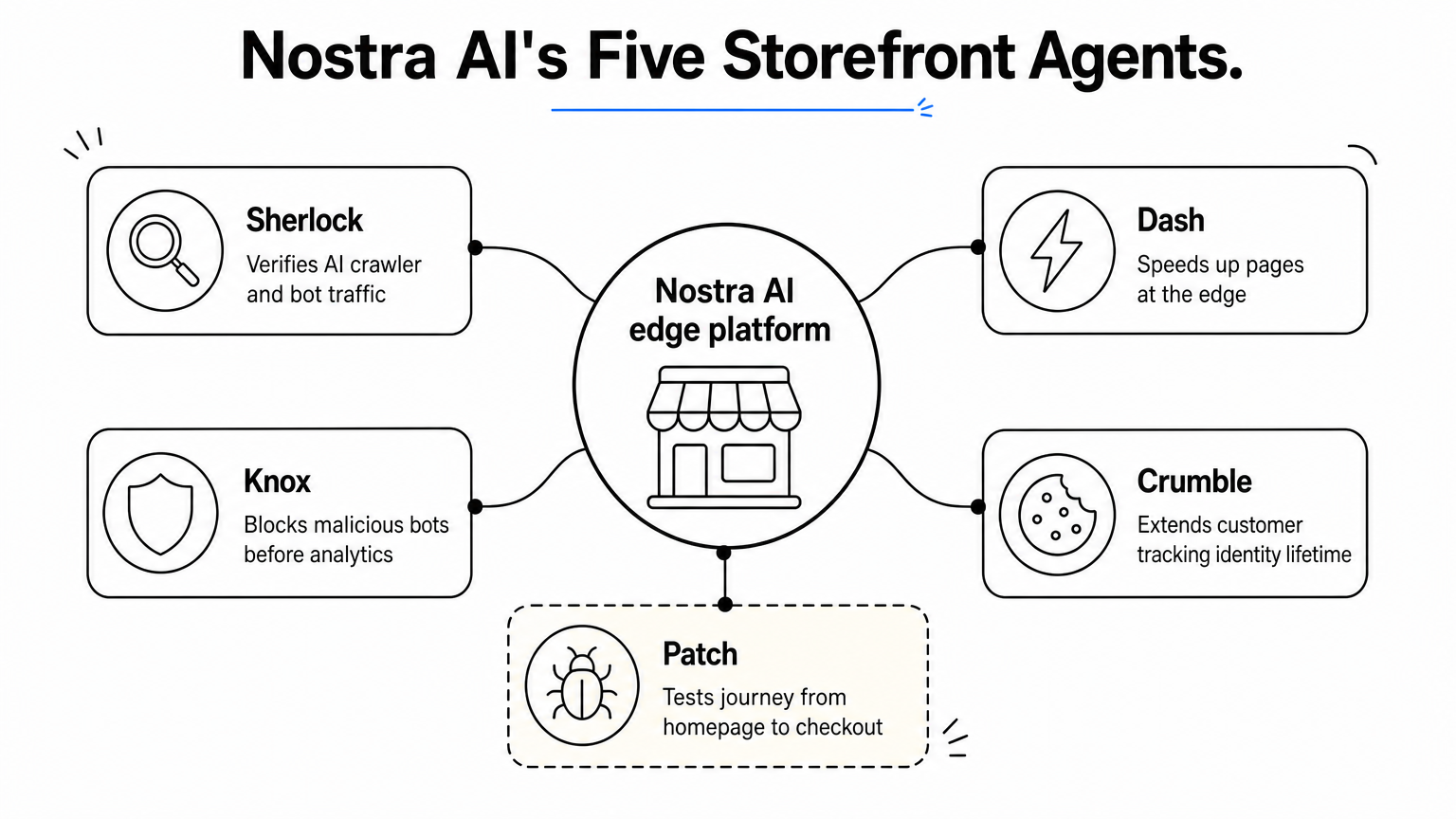
Nostra AI is an edge platform for ecommerce storefronts. Its Sherlock agent (Edge Detect) identifies and verifies AI crawler and bot traffic that hits your store, then passes that data to your AEO tools for tracking AI search visibility. Most GEO platforms show you what AI answers say about your brand. Sherlock shows you which AI agents actually visit your site, and whether they are real.
Deployment is light. On day 1, you connect through a DNS-level change, with no code changes and no replatforming. During days 2 to 14, the agents learn your store. After that, they keep optimizing and enforcing rules on their own. Nostra AI is SOC 2 compliant.
Visibility tracking tells you what AI says about you, and crawler data tells you who is actually reading your store.
Mid-size and large ecommerce and DTC brands get the most from it, especially in beauty, fashion, and retail. Think growth leads, ecommerce directors, and digital operations managers who want results without pulling in engineers. More than 300 brands run on the platform, including U Beauty, Nixon, and Credo Beauty.
Skip it if you only want a dashboard of prompt rankings. It works best as the data layer beside a visibility tracker, so you can separate real AI crawler activity from noise before you act on a report.
Nostra AI runs five agents, and each one covers a separate storefront problem. Sherlock is the one that matters most for GEO, but the other four protect the revenue that AI-driven visits are supposed to bring in.
| Agent | Job | Reported result |
|---|---|---|
| Sherlock (Edge Detect) | Identifies and verifies AI crawler and bot traffic | Clean data for AEO tools |
| Dash (Edge Delivery) | Monitors and accelerates page speed at the edge | Up to 47% faster load times |
| Knox (Edge Protect) | Blocks malicious bots before they skew analytics | 10+ billion bots blocked annually |
| Crumble (Edge ID) | Extends customer tracking identity lifetime | Cookies from about 1 week to 2+ years |
| Patch (Edge Assurance) | Tests the full journey, homepage to checkout, on real devices | Bug reports with repro steps and video |
Pricing is not listed as a flat public rate in the material we reviewed, so you should request a quote on the Nostra AI site. Expect it to be scoped to your store rather than priced per tracked prompt, as many GEO tools are.
The limits are clear, and you should weigh them:
So it sits next to the best generative engine optimization platforms for AI search results, not in place of them. Pair it with one of the tools below.
Profound is an enterprise-grade AI visibility platform. It runs prompts across ChatGPT, Perplexity, Google AI Overviews, Gemini, Copilot, and other engines, then reports mentions, citations, sentiment, and share of voice against your competitors. Buyers hunting for the best rated generative engine optimization for AI usually see Profound near the top of review lists.
The platform goes beyond a rank-style report. It shows which pages AI engines cite, which prompts your rivals win, and where your brand is missing.
Profound is the deepest reporting layer on this list, and you pay for that depth.
Large brands, agencies, and enterprise marketing teams get the most from it. If you have a dedicated SEO or brand team that will review prompt-level data every week, you will use what you buy. Security reviews are easier too, since the company advertises SOC 2 compliance.
Small teams should look elsewhere. Without someone to act on the findings, you will pay for depth you cannot use, and a lighter tracker will serve you better.
Profound packs a lot into one product. These are the features that matter most for a GEO program:
Profound has offered entry plans from roughly $99 per month, with a Growth tier near $399 and custom enterprise contracts above that. Cheaper tiers cap prompts and engines, and plans change often, so confirm current pricing on Profound's site before you budget.
Keep these limits in mind:
AthenaHQ is an AI visibility platform founded by former Google Search and DeepMind engineers. It runs prompts across ChatGPT, Perplexity, Gemini, Claude, and Google AI Overviews, then reports where your brand is mentioned, cited, and described. You see which competitors win a prompt and which sources the engines trust.
What sets it apart is the push toward action. Its recommendations engine turns visibility gaps into a task list, so you know what to publish or fix next.
AthenaHQ is built for teams that want a tracker to tell them what to do next, not just where they stand.
Marketing and SEO teams at growth-stage brands get the most from AthenaHQ. If you have writers or an agency ready to ship content, the task list gives them clear direction. It is a strong pick for the best generative engine optimization for AI focused businesses that want a self-serve tool without an enterprise sales cycle.
Pure ecommerce operators should check the fit. You still need separate crawler data to confirm which AI agents reach your storefront, and AthenaHQ does not collect that.
The product covers the core GEO workflow, with extra weight on recommendations:
Together, these let a small team move from reporting to execution without a separate content tool.
AthenaHQ has listed self-serve plans starting near $295 per month, with custom enterprise pricing above that. Usage is credit-based, so your costs rise with prompts and engines. Plans change often, so confirm current rates on the AthenaHQ site before you budget.
Weigh these limits before you buy:
SE Visible is an AI visibility tracker from the team behind SE Ranking. It checks how your brand appears in ChatGPT, Perplexity, Gemini, and Google AI answers. Then it reports mentions, links, sentiment, and share of voice against your competitors.
The pitch is simplicity. If you are working out which generative engine optimization is best for AI and your team has never done this before, SE Visible keeps the setup short and the reports easy to read.
SE Visible trades enterprise depth for a dashboard you can understand in your first session.
Small and mid-size marketing teams, agencies, and SEO generalists get the most from it. If you already use SE Ranking for classic rank tracking, you can run AI and search reporting side by side with a familiar interface.
Enterprise teams may outgrow it. If you need log-level crawler data, custom data pipelines, or heavy governance, you will want a deeper platform like Profound. Ecommerce brands should also add a tool that verifies real AI bot visits to the storefront.
The feature set covers the basics of a GEO program without much clutter:
SE Visible has been sold as a self-serve subscription with tiered plans, and entry pricing has sat near $189 per month, with higher tiers adding prompts and seats. A short free trial has been available. Plans change often, so confirm current rates on the SE Visible site before you commit.
Before you buy, weigh these limits:
Peec AI is a Berlin-based AI search analytics tool. It runs your chosen prompts across ChatGPT, Perplexity, and Google AI Overviews, then reports visibility, position, and sentiment for your brand against competitors. Engines such as Gemini, Claude, and AI Mode are available as add-ons.
The product is deliberately narrow. It tracks and reports, and it leaves content production to you. That focus keeps the interface clean and the setup quick.
Peec AI is the tracker to pick when you want clear numbers fast and have no use for a content suite.
Agencies, startups, and in-house SEO teams get the most from it. Plans are priced by prompt, not by seat or country, so it suits agencies reporting to many clients and brands that track several markets and languages.
Teams that want writing help should look at AthenaHQ or Writesonic instead. Ecommerce operators also need separate crawler data, because Peec AI shows what engines say about you, not which bots visit your store, and that data is what tells you which AI crawlers are worth letting into your store.
The core tracking is simple, and a few extras make the reports more useful:
Peec AI bills by the number of tracked prompts. These figures are approximate and in euros, and plans change often, so confirm current rates on Peec's site before you budget.
| Plan | Approx. monthly price | Tracked prompts |
|---|---|---|
| Starter | About €90 | About 25 |
| Pro | About €200 | About 100 |
| Enterprise | From about €500 | 300 or more |
Weigh these limits before you buy:
Otterly AI is a Vienna-based tool that monitors your brand across AI search engines. It runs your prompts through ChatGPT, Perplexity, Google AI Overviews, and Copilot, then reports whether you are mentioned and which links get cited. Gemini and AI Mode are available as add-ons.
Built to be cheap and simple, it asks you to enter prompts and then tracks mentions and citations over time. You skip the heavy setup that enterprise platforms need.
Otterly AI is the lowest-cost way to start measuring your AI visibility.
Small businesses, solo marketers, and teams running a first pilot get the most from it. If you are comparing top generative engine optimization tools for AI search results and budget is the main limit, the entry plan lets you test the category for under $30 a month.
Larger teams will hit the ceiling quickly. Ecommerce operators also need a separate source of crawler data, because Otterly shows what engines say about you, not which bots visit your store.
Features stay focused on monitoring, with one audit tool on top:
Otterly has listed three monthly tiers, along with a short free trial. The figures below are approximate, and plans change often, so confirm current rates on Otterly's site before you budget.
| Plan | Approx. monthly price | Tracked prompts |
|---|---|---|
| Lite | About $29 | About 15 |
| Standard | About $189 | About 100 |
| Premium | About $489 | About 400 |
Weigh these limits before you buy:

Scrunch AI is a Salt Lake City company that monitors how AI engines describe your brand. It tracks ChatGPT, Claude, Perplexity, Gemini, Google AI Overviews, and Copilot. You get reports on mentions, citations, sentiment, and the sources engines lean on, broken out by customer persona.
The twist is its Agent Experience Platform (AXP). Where most trackers stop at reporting, AXP serves AI bots a streamlined, machine-readable version of your pages through your CDN, while human visitors see the normal site.
Scrunch is one of the few trackers that tries to change what AI crawlers read, not just report on what they say.
Mid-size and enterprise brands with complex sites get the most from Scrunch. If your pages rely on heavy JavaScript, or you suspect AI crawlers cannot read your product content, AXP addresses that problem directly. It is a strong candidate for the best generative engine optimization for AI focused businesses with a technical team behind them.
Small teams and first-time buyers may find it more than they need. You also need someone who can work with your CDN. Ecommerce operators still benefit from independent crawler verification, since Sherlock can verify AI agents on Shopify and confirm which ones really reach your store before you serve them anything special.
Scrunch pairs monitoring with technical tooling. These are the pieces to look at first, because they set it apart from a plain prompt tracker:
Scrunch has sold self-serve plans starting around $250 to $300 per month, with a mid tier near $500 and custom enterprise contracts above that. AXP typically sits in higher tiers. Plans change often, so confirm current pricing on Scrunch's site before you budget.
Weigh these limits before you buy:
The Semrush AI Visibility Toolkit adds AI search tracking to the SEO suite many teams already use. It measures how often your brand appears in answers from ChatGPT, Google AI, Gemini, and Perplexity. Then it scores your visibility, sentiment, and share of voice against competitors.
Its edge is context. You see AI visibility next to organic rankings, backlinks, and site audits in one login, so you can spot where classic SEO wins fail to carry over.
Semrush's strength is not deeper AI data, it is having AI data beside the SEO data you already use.
Teams that already pay for Semrush get the fastest value. If you are asking which generative engine optimization is best for AI and you want to avoid another vendor contract, this is the lowest-friction answer. It also suits agencies and in-house SEOs who report on classic and AI search together.
Pure AI-first teams may want more. The toolkit is less specialized than Profound or Scrunch, and ecommerce operators still need verified crawler data from their own storefront.
Core features focus on tracking and benchmarking, with some SEO tooling on the side:
Semrush has sold the toolkit as an add-on at about $99 per month per domain, and it also appears inside higher Semrush One plans. Plans change often, so confirm current rates on the Semrush site before you budget.
Weigh these limits before you buy:
Ahrefs Brand Radar is an AI visibility add-on inside the Ahrefs SEO suite. It does not make you build a prompt list first. It draws on a large index of real AI search queries and shows how often your brand is mentioned and cited in Google AI Overviews, ChatGPT, Perplexity, Gemini, and Copilot. You see mentions, citations, and share of voice next to your competitors.
If you are weighing which generative engine optimization is best for AI and you want market-wide data on day one, this approach skips the setup work.
Brand Radar shows how your whole market talks to AI, not just the 50 prompts you thought to track.
Teams that already live in Ahrefs get the quickest value. SEO leads, content strategists, and agencies can read AI visibility beside backlinks, keywords, and organic traffic. It also suits brands that want category-level discovery, such as finding which questions your rivals win.
Teams that need tight control over a fixed set of prompts should check the fit. Ecommerce operators also need independent crawler data, because Brand Radar reports what engines say, not which bots visit your storefront.
The feature set leans on Ahrefs' data strengths:
Brand Radar requires an Ahrefs subscription. It has been sold as a paid add-on at about $199 per month per AI platform, with an all-platform bundle near $699. Ahrefs has also offered a limited free view of Google AI Overviews data. Plans change often, so confirm current pricing on the Ahrefs site before you budget.
Weigh these limits before you buy:
Writesonic GEO is the AI visibility suite from Writesonic, a company known for AI writing tools. It tracks how your brand shows up in ChatGPT, Perplexity, Gemini, Claude, and Google AI Overviews. It then ties each visibility gap to a content fix you can act on inside the same product.
That pairing is the point. Most trackers end at the report, so your team has to brief writers elsewhere. Here, the tracker and the content workflow share one login.
Writesonic GEO is the pick when you want the same tool to find the gap and draft the page that closes it.
Content-led marketing teams get the most from it. If you have a small team, no agency, and a long list of pages to write or refresh, you can move from finding a gap to publishing without a second vendor. It also suits teams asking which generative engine optimization is best for AI when content output is the bottleneck, not reporting.
Enterprise teams should look harder. Profound goes deeper on reporting and log-level data. Ecommerce operators also need independent crawler verification, since Writesonic reports what engines say about you, not which bots reach your storefront.
The product mixes tracking with content tools. These are the pieces that matter for a GEO program:
Writesonic has sold tiered monthly plans that start with content tools near $39 per month. AI visibility tracking and the fuller GEO features have sat in higher tiers, roughly $199 and up, with custom enterprise contracts above that. Plans change often, so confirm current pricing on Writesonic's site before you budget.
Weigh these limits before you buy:
So, which generative engine optimization is best for AI? It depends on your bottleneck. Pick Profound or Scrunch for enterprise depth, AthenaHQ or Writesonic when content output is the limit, and Semrush or Ahrefs if you already live in those suites. For a lean start, Peec AI, Otterly, or SE Visible will get you measuring within a day.
Whatever you choose, ecommerce teams should add verified crawler data, because a tracker only reports what AI engines say about you. Junk traffic also skews every number in your analytics, from sessions to conversion rate. Start with clean traffic, then measure. Nostra AI's Edge Protect can keep bad bots out of your analytics and ad spend, filtering them in real time before they ever reach your funnel.


.svg)
