People now ask ChatGPT, Perplexity, and Google's AI Overviews a question and accept the answer without clicking a single link. If your brand isn't named in that answer, you don't exist for that shopper. That is the problem AEO AI engine optimization is built to solve.
AEO is the practice of structuring your content and storefront so AI systems can find it, trust it, and cite it in generated answers. SEO fights for a ranked link. AEO fights for a mention inside the response. GEO covers much of the same ground, and many people use the terms interchangeably. In practice, AI answer engine optimization comes down to clear answers, structured data, and crawlable pages.
This article explains what AEO is, how it differs from SEO and GEO, and the steps that earn citations. We also cover something most guides skip: AI crawler traffic. At Nostra AI, our Sherlock agent identifies and verifies the bots visiting ecommerce stores, so you can see what AI engines actually read before you optimize for them.
Search used to reward whoever ranked first. Now the answer often arrives before any ranking matters. Treating AI engine optimization (AEO) as a side project hands that moment to your competitors, and three reasons make it a brand-level priority rather than a technical curiosity.
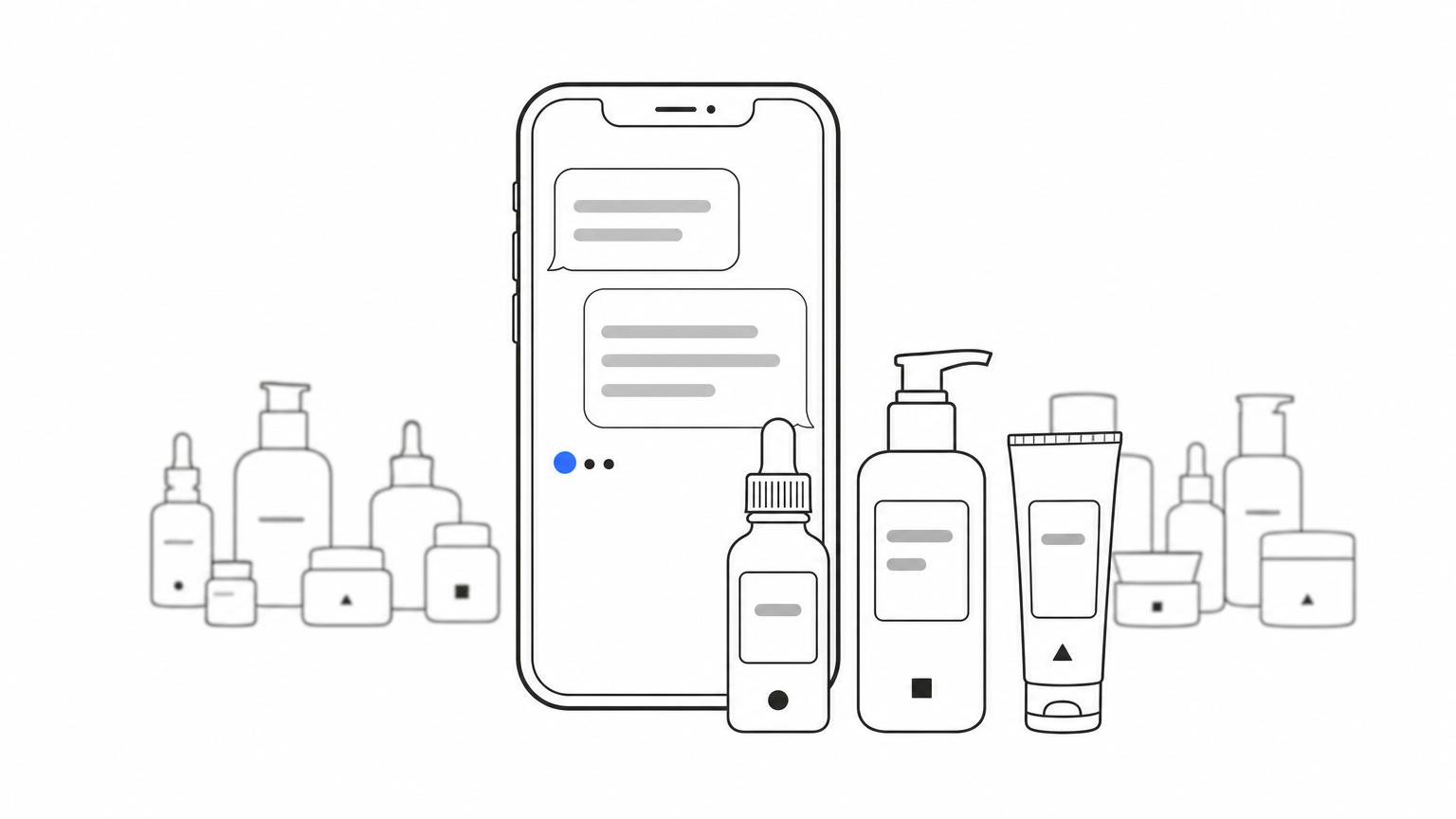
A shopper asks, "What's the best vitamin C serum for sensitive skin?" Ten blue links used to follow. Now an AI engine writes a short recommendation and names three or four brands. Those brands get the consideration. Everyone else is invisible, however well they rank on page one.
Zero-click behavior makes this sharper. When the answer satisfies the shopper, no visit happens, so you can't retarget them or learn what they wanted. The answer is the only place your brand gets a chance.
If an AI engine doesn't name you, the shopper never learns you were an option.
Being cited reads like a third-party recommendation. The engine presents your brand as a source, not as a sponsor. That framing shapes how much weight the shopper gives you, and it influences what they search next. It also decides what the AI says about you, which is where AEO touches brand control:
Eligibility starts with access. AI crawlers must reach your pages quickly and read them cleanly. Slow pages, blocked bots, and heavy JavaScript templates can keep your content out of the pool an engine draws from, no matter how good the copy is.
Bot traffic also muddies the picture. Nostra AI's Knox agent helps block over 10 billion malicious bots a year across our brands, while Sherlock separates verified AI crawlers from scrapers pretending to be them. Without that split, you'll mistake junk traffic for AI visibility, and you'll optimize for engines that never visited.
The three terms overlap, but each one targets a different outcome. SEO earns a ranked link. AEO earns a citation inside the answer. GEO sits close to AEO, and knowing which is which keeps you from spending budget on the wrong fix.
| SEO | AEO | GEO | |
|---|---|---|---|
| Goal | Rank a page in results | Be the source for a direct answer | Be described well in generated responses |
| Where you appear | Search results page | AI Overviews, ChatGPT, Perplexity | Same generative engines |
| Win condition | A click | A citation or named mention | A mention with favorable framing |
| Key inputs | Keywords, links, page experience | Direct answers, structured data, crawl access | Authority, original data, brand mentions across the web |
Most of the difference comes down to the unit of competition. SEO competes at the page level. AEO competes at the passage level, where an engine lifts one clear paragraph, table row, or FAQ answer. A page ranked ninth can still be cited if one section answers the question best.
SEO gets you ranked. AEO gets you quoted.
GEO, or generative engine optimization, focuses on how large language models synthesize and describe brands. Some teams use it for broad authority building and reserve AEO for the tactical work of formatting answers. That split is useful, but it isn't a standard. Treat AI engine optimization (AEO) as the working umbrella and don't lose sleep over labels.
SEO still matters. Engines such as Google's AI Overviews often pull from pages that already index and rank well. Strong SEO is the foundation, and AEO adds answer formatting and bot access on top of it.
Good AEO AI engine optimization is mostly editing, not new tooling. You make each page easy to quote, easy to verify, and easy to crawl. Start with your highest-revenue category and product pages, not your blog.
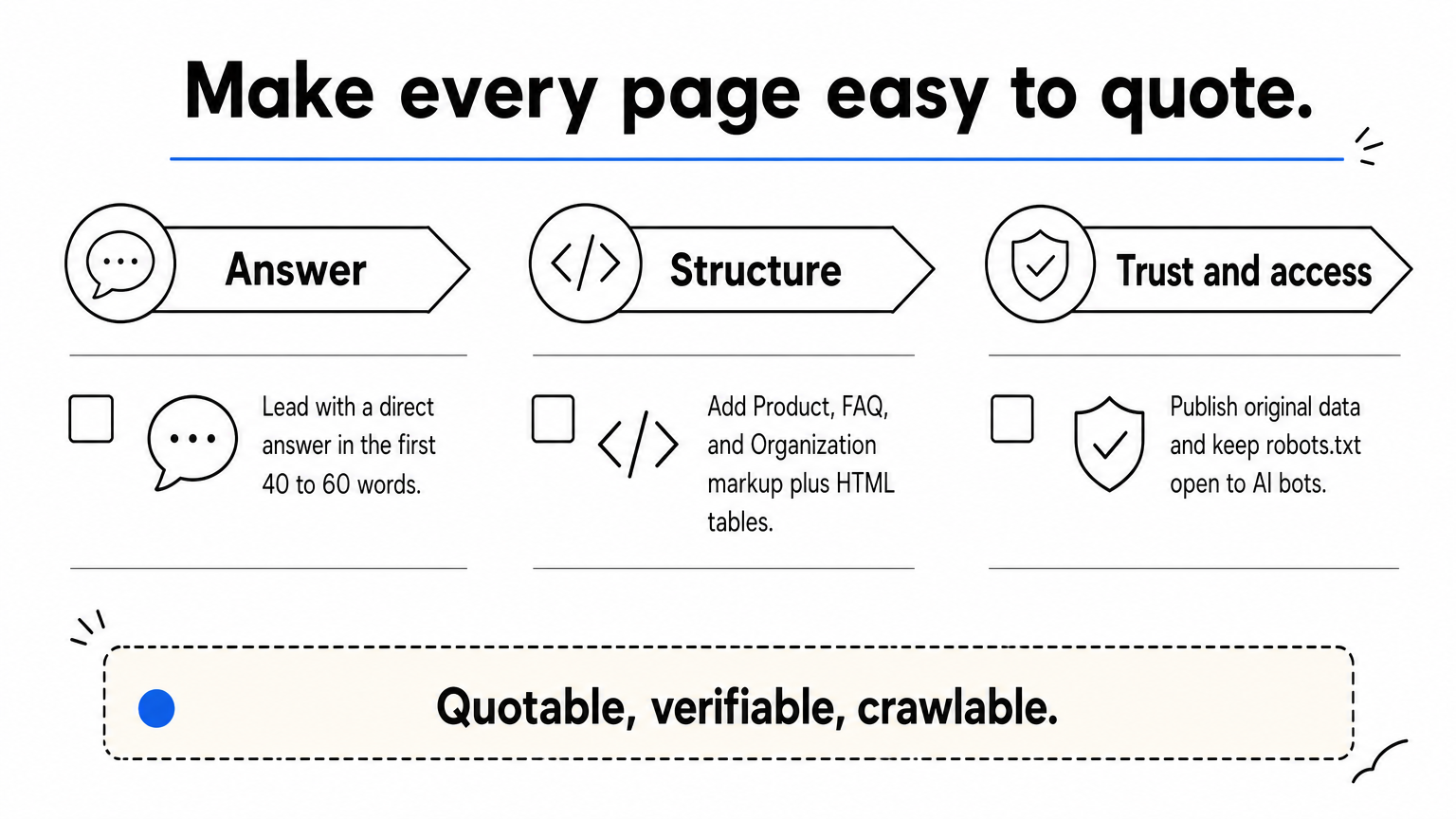
Open each page with a direct answer in the first 40 to 60 words. Put it under a question-style heading, then add detail below. Engines lift passages, so every section should make sense without the rest of the page.
On a product page, that means a plain statement: "This vitamin C serum is fragrance-free and suits sensitive skin. It contains 15% L-ascorbic acid." A brand slogan gives an engine nothing to quote.
Write every passage so it still works when it's quoted alone.
Structured data stops machines from guessing. Google documents the formats in its structured data guide, and the same markup helps other engines read your pages. Prioritize these:
Engines favor sources they can verify. Publish original data, such as test results or return-rate findings, and add named authors and update dates. Link to primary sources instead of rewording other blogs.
Finally, check access. Make sure robots.txt doesn't block GPTBot, OAI-SearchBot, or PerplexityBot unless you mean to. Render key copy in HTML rather than JavaScript-only templates, and keep pages fast. Teams doing AI engine optimization AEO often skip this step, then wonder why great copy never gets cited.
Optimizing without measurement is guesswork. Good AEO AI engine optimization tracks three layers: who crawls you, who cites you, and who clicks. Each answers a different question.
Start in your server or CDN logs. Search for GPTBot, OAI-SearchBot, ChatGPT-User, PerplexityBot, and ClaudeBot. User agent strings are easy to fake, so check IP addresses against each vendor's published ranges. Scrapers routinely pose as AI bots to get past filters.
A user agent proves nothing. Verification does.
Sherlock automates this check. It identifies and verifies AI crawler traffic on your storefront, so you know which engines really read your product pages and which visits were imposters.
Next, build a prompt list of 20 to 30 questions your shoppers actually ask. Run them weekly in ChatGPT, Perplexity, and Google's AI Overviews. Log every result in a spreadsheet and compare week over week, because answers shift often. Record:
Finally, look at who clicks. Expect small numbers at first, since most AI answers end without a visit. Filter bots out before you trust any figure.
| Signal | Where to find it | What it tells you |
|---|---|---|
| Crawler hits | Server or CDN logs | Which engines can read your pages |
| Referrals from chatgpt.com, perplexity.ai | GA4 traffic acquisition | Which answers send visitors |
| Landing pages | GA4 landing page report | Which content earns clicks |
| Citation rate | Your prompt spreadsheet | Whether you're named at all |
Theory only goes so far. Here is what AEO AI engine optimization looks like on a real storefront, followed by a plan you can run in one quarter.
The fastest wins come from replacing vague copy with specific, quotable facts. Start with these:
Shoppers ask engines about returns and shipping constantly. Clear policy text gives the engine a correct answer to cite instead of a guess.
Sequence matters here. Measure first, so you know what you're fixing.
| Days | Focus | Output |
|---|---|---|
| 1-30 | Baseline | Check robots.txt, verify crawler visits, build a 20 to 30 prompt list, log current citations |
| 31-60 | Rewrite | Edit your top 10 revenue pages, add Product and FAQ markup |
| 61-90 | Review | Re-run every prompt, compare citation rate, fix gaps, extend to the next 20 pages |
If you use Nostra AI, Day 1 is a DNS-level connection. During the Days 2-14 observation window, Sherlock learns your store and shows which AI crawlers actually read it, which gives you a clean traffic baseline before you edit anything.
Baseline first, rewrite second, measure third.
Expect slow movement. Engines refresh at different speeds, so judge progress by citation rate over several weekly runs, not by a single result. Teams that skip the baseline can't tell whether a change worked, and that is the most common reason AEO efforts stall.
AEO AI engine optimization comes down to three habits. Lead each page with a direct, quotable answer, add structured data so machines can parse it, and keep it crawlable. Then measure who visits, who cites you, and who clicks. SEO stays your foundation, and AEO adds the formatting and access that earn a mention inside the answer.
Begin with your top revenue pages and a clean baseline. Traffic data only helps when it's real, so separate verified AI crawlers from scrapers before you trust any number. Otherwise you'll optimize for visitors that never existed. If you want to protect your analytics and ad spend, filter AI-powered bad bots before they reach your site with Nostra AI's Edge Protect, then build your AEO plan on traffic you can believe.


