Your traffic reports look fine, but your organic numbers keep sliding, and you can't tell if it's Google, Bing, or the growing pile of AI chatbots answering questions before shoppers ever hit your site. That's the problem ai search engine optimization solves: it's the practice of shaping your content, structure, and site signals so both traditional search engines and AI-driven answer engines like ChatGPT, Perplexity, and Google's AI Overviews can find, understand, and cite your storefront.
This article breaks down exactly what that means and how it works in practice. You'll see how search engine optimization with ai differs from classic keyword-and-backlink SEO, why AI crawlers behave nothing like Googlebot, and what separates a page that gets cited from one that gets ignored.
We work with ecommerce brands every day who need clean, fast, verifiable storefronts for these bots to crawl, and that experience shapes what follows. Expect a practical walkthrough covering AEO fundamentals, technical readiness, content structure, and the traffic-verification steps that let you actually measure whether AI systems are reading your pages at all.
Something fundamental broke in how people find products online, and most ecommerce teams haven't caught up. Shoppers now ask ChatGPT to compare moisturizers, ask Perplexity which running shoes fit wide feet, and let Google's AI Overviews summarize reviews before they ever click a blue link. AI powered search engine optimization isn't a future trend you can plan for next year. It's already reshaping which brands get discovered and which ones quietly disappear from the buying journey.
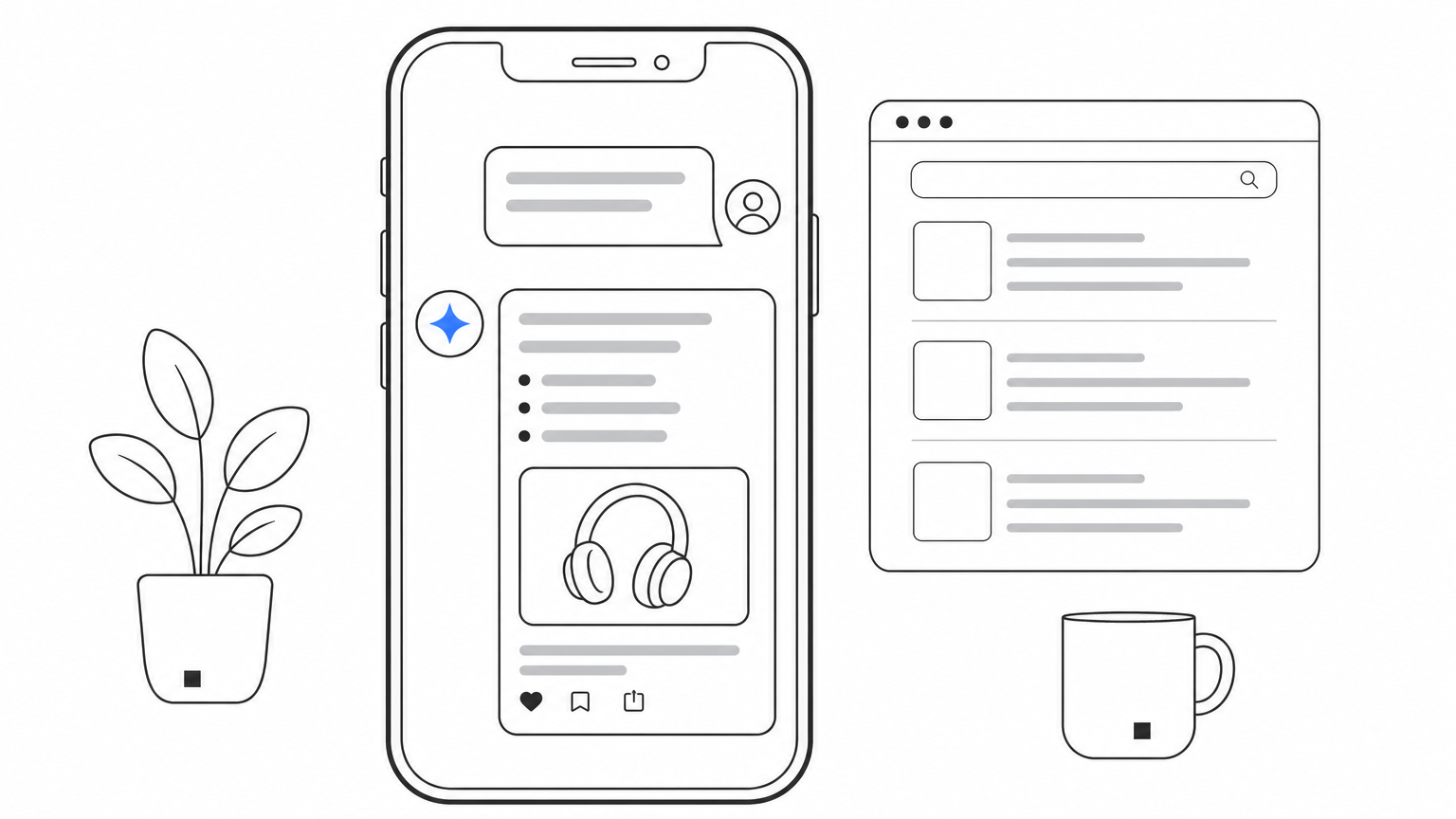
AI Overviews now appear on a huge share of Google searches, and when they do, click-through rates to the underlying websites drop sharply because the answer is already sitting on the results page. The same pattern shows up inside ChatGPT and Perplexity: the assistant synthesizes an answer from several sources and the shopper rarely bothers to visit any of them. That means search engine optimization ai strategies built purely around ranking position one no longer guarantee a visit. You can rank first and still get zero traffic if the AI answer satisfies the searcher on the spot.
If an AI engine can answer the question without sending a click, ranking well isn't enough anymore, getting cited is.
Research from Google itself shows a growing share of purchase research now starts with a conversational query rather than a keyword search, especially for comparison-heavy categories like beauty, apparel, and electronics. A shopper asking "best clean beauty serum for sensitive skin" through an AI assistant is further along in decision-making than one typing the same phrase into a search box, because they've already narrowed the field to whatever the AI surfaced. If your product page isn't part of that surfaced set, you're not losing a ranking spot, you're losing the sale before it started.
Look at referral logs from any mid-size ecommerce site today and you'll see a small but fast-growing slice of sessions arriving from AI platforms rather than classic search engines. That slice is easy to miss in standard analytics because most platforms still bucket AI referrals under "direct" or "other," which hides the real story from teams making budget decisions.
| Referral source | 2022 share (approx.) | 2026 share (approx.) | Trend |
|---|---|---|---|
| Traditional organic search | Dominant | Declining | AI Overviews absorbing clicks |
| Paid search | Stable | Stable | Largely unaffected so far |
| AI assistants (ChatGPT, Perplexity, Copilot) | Negligible | Small but growing fast | Compounding month over month |
| Direct/branded | Stable | Slightly up | Boosted by AI-driven brand awareness |
The absolute numbers vary by category, but the direction is consistent everywhere we look across the 300+ storefronts we monitor, and brands that track it closely see the payoff: Omnilux grew AI-attributed revenue from 1% to 3% of total sales.
Brands often treat ai and search engine optimization as a nice-to-have, something to revisit once traditional SEO is "done." That mindset misreads the risk. AI engines build their trust in a source over time, favoring sites they've crawled successfully and cited before. Brands that get their technical foundation, structured data, and content clarity right now are building a lead that's genuinely hard for latecomers to close, because the AI systems already know how to read them. The ones who wait are optimizing for a search landscape that's already partly gone, and every quarter of delay means another quarter of AI crawlers learning to trust competitors instead of you.
Getting cited by an AI engine requires a different discipline than chasing rank position, and most of it comes down to making your content easy to lift out of context. AI for search engine optimization starts with writing answers the way you'd want them quoted, not the way you'd want them to rank, which is the thread running through every technique for winning AI visibility.
Winning citations means putting the direct answer in the first sentence or two of a section, then backing it up with detail afterward. AI models scan for the sentence that resolves the query and often quote it verbatim, so burying your answer under three paragraphs of setup means the model skips your page for a competitor's. This is the core shift in ai search engine optimization strategies: write the summary first, the explanation second.
Put the answer first, the argument second, or the AI engine will find someone else's answer instead.
Headings, lists, and tables aren't just for skimming readers anymore, they're the scaffolding AI crawlers use to pull discrete facts out of a page. A paragraph of prose describing five product specs is far harder to extract than a table listing them. Practical formatting moves that help:
Models weigh sourced, specific claims more heavily than vague marketing language, so a sentence backed by a number, date, or named source is more likely to get cited than a generic superlative. Numbers earn trust that adjectives can't. If you claim your serum reduces redness, cite the study or the percentage, because search engine optimization for ai rewards specificity over persuasion.
None of this matters if the crawler can't reach the page in the first place, which is why page speed matters as much for answer engine optimization as the copy does. Fast load times, clean HTML, and accessible markup determine whether an AI crawler even finishes reading your content before timing out, which is exactly the kind of edge-level groundwork Dash, the agent behind Edge Delivery, is built to handle automatically.
Crawling for AI engines works differently than crawling for Google, and understanding that difference explains why some pages get cited constantly while others never show up in an answer. Search engine optimization in AI systems starts with a separate fleet of bots, GPTBot, PerplexityBot, ClaudeBot, and Google-Extended among them, each with its own crawl schedule, rendering rules, and appetite for your pages, which is also why letting AI crawlers into your store is a decision worth making deliberately.
Googlebot has decades of tuning behind it and generally handles JavaScript, redirects, and slow servers with patience. Most AI crawlers don't extend that same courtesy. They often skip pages that take too long to render, ignore content locked behind client-side scripts, and abandon a crawl entirely if a server responds slowly. Edge Detect, Nostra AI's bot visibility agent, exists specifically to identify which of these bots are hitting your storefront and verify whether they're legitimate crawlers or spoofed traffic pretending to be one, which matters because you can't fix a citation gap you can't see.
| Crawler | Belongs to | Typical behavior |
|---|---|---|
| GPTBot | OpenAI | Crawls broadly, respects robots.txt, sensitive to slow load times |
| PerplexityBot | Perplexity | Frequent re-crawls, favors freshly updated pages |
| ClaudeBot | Anthropic | Conservative crawl rate, strict on malformed HTML |
| Google-Extended | Feeds AI Overviews, tied to existing Search index |
When someone asks an AI assistant a question, the system doesn't rank ten blue links, it retrieves a handful of passages it judges most relevant and stitches an answer together, then decides which sources earned a visible citation. That retrieval step rewards pages with unambiguous, self-contained answers over pages that require the reader to piece context together from surrounding paragraphs.
A page that answers one question clearly gets cited more often than a page that answers five questions vaguely.
Even when two pages say roughly the same thing, AI engines lean toward the source with clearer authorship, consistent publishing history, and structured markup like schema.org product and FAQ tags. Verified crawl access matters too: if a bot can't confirm your server responded with a real 200 status and clean HTML, it treats the page as unreliable and moves on. That's why ai powered search engine optimization work increasingly overlaps with basic site reliability, not just copywriting. Get the plumbing right and the citations follow.
Much of what worked for traditional SEO still matters. Fast pages, clean code, and relevant content remain the foundation, so nothing here throws out a decade of best practice. What changes is the goal at the end of the process: traditional search engine optimization chases a ranking position on a results page, while ai search engine optimization strategies chase a citation inside an answer that may never show a results page at all.
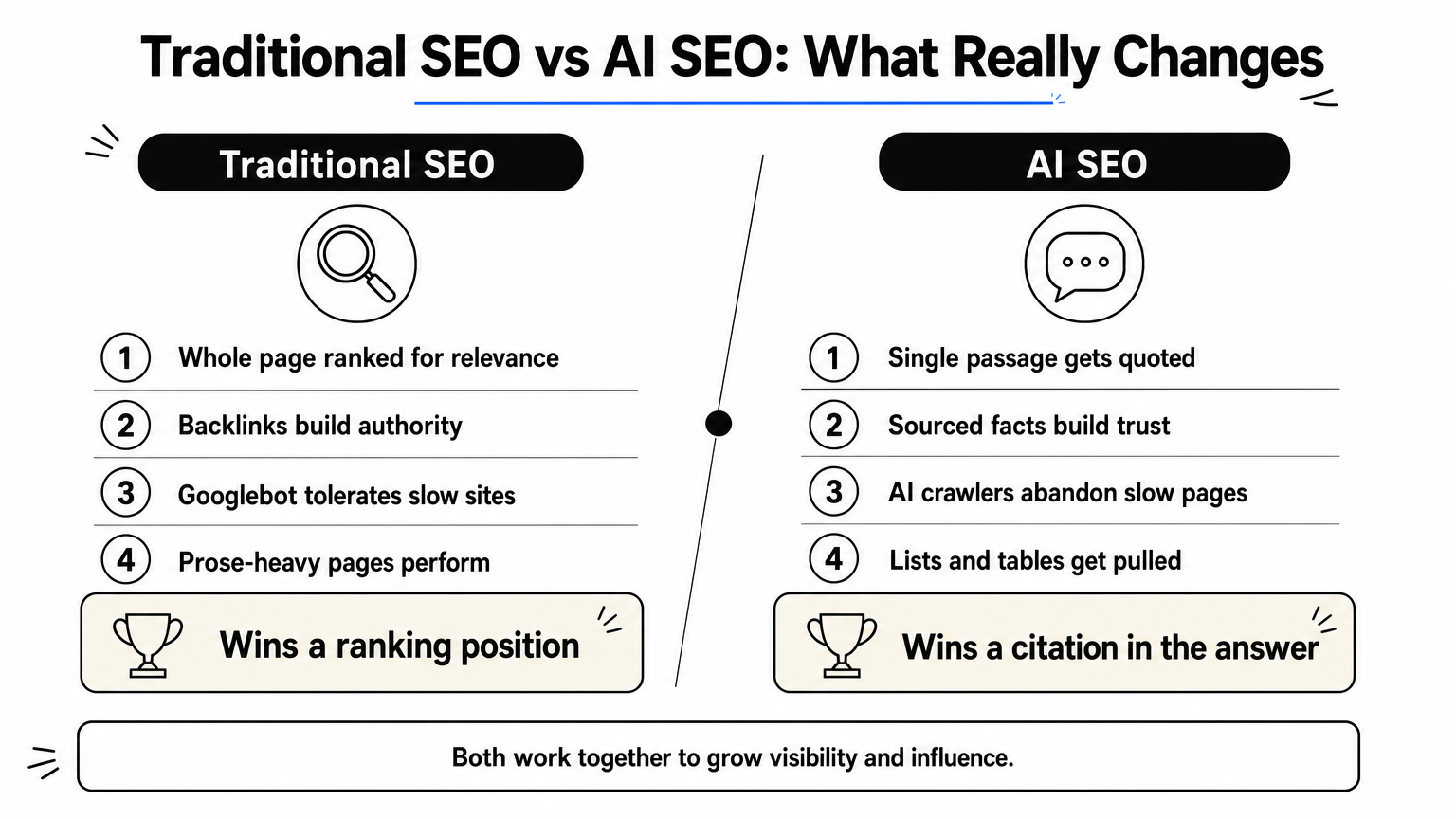
Google's classic ranking algorithm evaluates whole pages and rewards the one that best matches a query. AI retrieval systems work at the passage level, pulling a paragraph or a table row rather than crediting an entire article. That means a page can rank poorly overall yet still get quoted, if one section answers a specific question cleanly. Conversely, a page that ranks first can get skipped entirely if every paragraph buries its answer under three sentences of preamble.
Traditional SEO rewards the best page. AI SEO rewards the best sentence on that page.
Link-building still helps with authority signals, but search engine optimization ai systems weigh specificity and sourcing more heavily than link volume. A claim backed by a number, a study, or a named source often outperforms a page with dozens of backlinks and vague marketing copy. Distribution used to be the differentiator; now clarity is.
Googlebot patiently waits out slow servers and renders JavaScript before giving up. Most AI crawlers don't. A storefront that ranked fine in traditional search for years can still be invisible to GPTBot or ClaudeBot if pages load slowly or depend on client-side scripts to display content, which is exactly the gap that making your site more legible to bots at the edge closes before it ever costs you a citation.
| Factor | Traditional SEO | AI SEO |
|---|---|---|
| Success metric | Ranking position | Citation / inclusion in answer |
| Evaluation unit | Whole page | Individual passage |
| Authority signal | Backlinks | Sourced, specific claims |
| Crawler patience | High (Googlebot) | Low (GPTBot, ClaudeBot, PerplexityBot) |
| Content format | Prose-friendly | Lists, tables, FAQ blocks favored |
Understanding ai and search engine optimization this way reframes the work: you're not abandoning SEO fundamentals, you're adding a second, stricter audience that reads faster and forgives less.
Most analytics platforms weren't built to answer the question you actually need answered: is GPTBot reading your product pages, and is Perplexity citing them? You have to go looking for the signal instead of waiting for it to show up in a standard dashboard. Ai search engine optimization strategies only work if you can measure whether they're working, so measurement isn't an afterthought here, it's half the job.
Google Analytics and most tag-based tools miss AI crawler visits entirely because crawlers don't execute JavaScript or fire tracking pixels. The only reliable record lives in your raw server logs, where every request, including GPTBot, ClaudeBot, and PerplexityBot, shows up with a timestamp, user agent, and response code. Pulling that data manually is tedious across a large catalog, which is why Nostra AI built the Sherlock agent specifically to isolate real AI crawler traffic from spoofed bots and hand you a clean read on who's actually visiting, a job that starts with knowing which bots deserve access to your Shopify store in the first place.
You can't improve a citation rate you've never measured, and analytics dashboards weren't built to show it to you.
Most platforms still lump ChatGPT and Perplexity referrals into "direct" or "other," so build a custom segment in GA4 that filters referral domains like chat.openai.com, perplexity.ai, and copilot.microsoft.com, or wire up AI discovery analytics for Shopify brands that report it for you. Watch this segment monthly rather than daily, since volume is still small enough that daily swings are mostly noise.
Pick the 15-20 questions your customers most often ask ("best moisturizer for sensitive skin," "are these watches waterproof") and run them through ChatGPT, Perplexity, and Google's AI Overviews yourself every few weeks, or automate the spot-checks with the best AEO tools for 2026. Log whether your brand appears, whether it's cited with a link, and which competitor shows up instead.
| Metric | Where to find it | What it tells you |
|---|---|---|
| AI crawler hits | Server logs | Whether bots can reach your pages |
| AI referral sessions | GA4 custom segment | Whether cited answers drive clicks |
| Citation rate on priority queries | Manual spot-checks | Whether you're winning the answer, not just the crawl |
| Crawl error rate | Server logs / status codes | Whether technical issues are blocking bots |
Combining these three views, crawl access, referral traffic, and manual citation checks, gives you a far more honest picture than any single one of the AI search engine optimization tools currently on the market.
Most ecommerce teams don't lose AI citations because they lack good content, they lose them because of small, fixable habits that block crawlers or bury the answer. Fixing these mistakes usually takes days, not months, once you know what to look for. Ai search engine optimization strategies fail more often from neglect than from bad strategy.
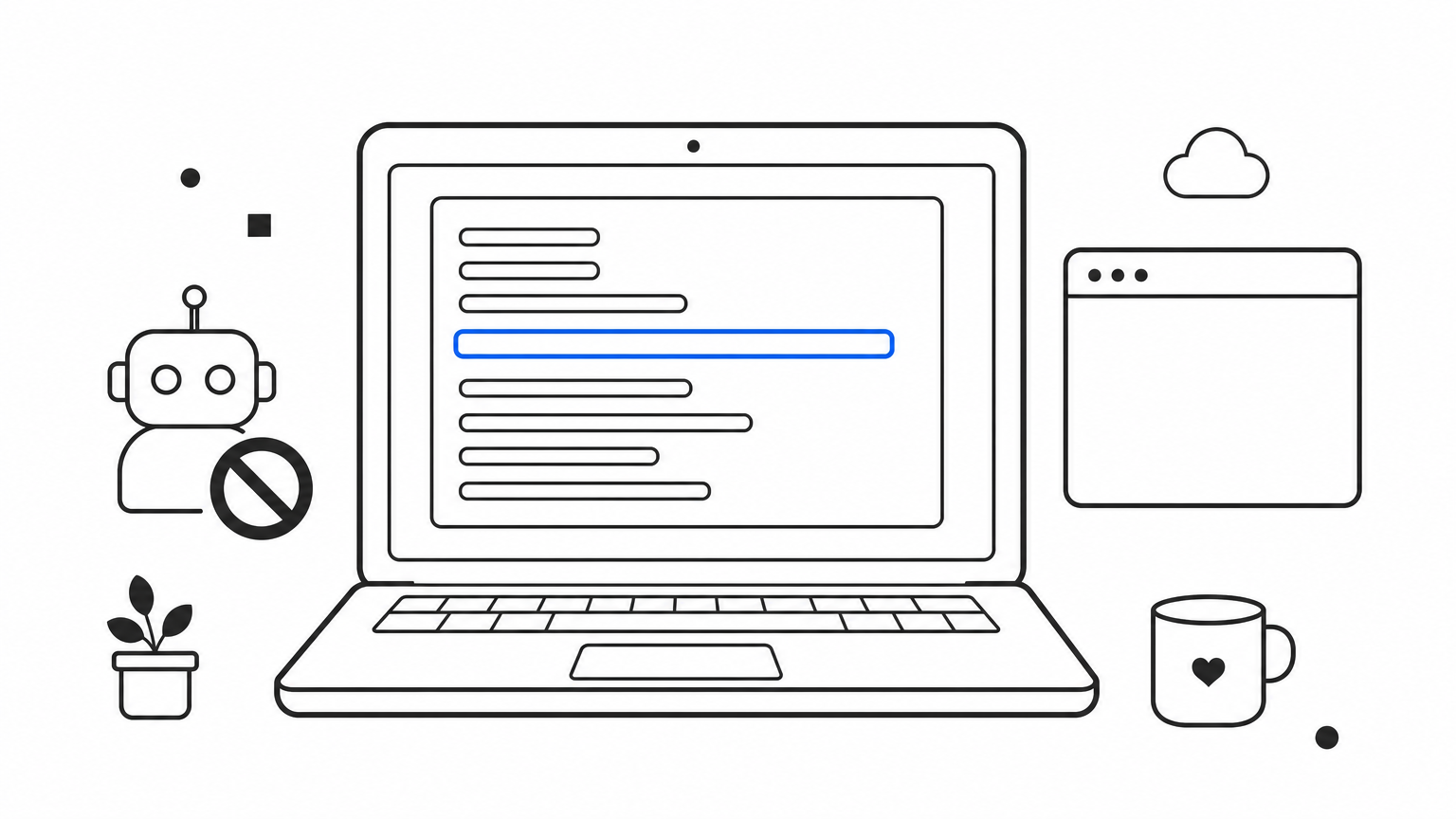
A surprising number of storefronts unintentionally disallow GPTBot or ClaudeBot in robots.txt, often left over from an old bot-blocking rule meant for scrapers, not legitimate AI crawlers. Others rely so heavily on client-side JavaScript to render product details that the crawler sees a blank page and moves on, the exact problem serving bots a pre-rendered page was designed to solve. Check your robots.txt file and a rendered HTML snapshot of your top pages before assuming the content itself is the problem.
Burying the direct answer under three paragraphs of brand story means the model can't extract a clean passage, so it skips your page even when your product is the right fit. Vague superlatives like "the best" or "industry-leading" without a number or source behind them get ignored too, because search engine optimization for ai rewards specificity over persuasion every time.
A crawler that can't find your answer in one clean passage will find someone else's instead.
AI engines re-crawl frequently and adjust which sources they trust based on recent freshness and accuracy, so a page optimized once and never revisited slowly loses citation share to competitors who keep updating theirs. Skipping structured data is another common gap: without schema.org markup for products, reviews, and FAQs, the crawler has to infer facts instead of reading them directly, which lowers confidence in what it extracts.
Here's a quick self-check before you assume your content is the issue:
Running through that list catches the majority of visibility gaps we see across the storefronts we monitor, and it costs nothing but an afternoon of technical review.
Ecommerce storefronts face a version of this problem that publishers don't: product pages change constantly, inventory shifts daily, and a single catalog can span thousands of SKUs that all need to stay crawlable at once. Search engine optimization using ai on a storefront isn't a one-time content project, it's an ongoing technical commitment that touches product feeds, checkout flows, and every AI shopping agent browsing and buying on your store.
Generic product descriptions written for a shopper skimming a page rarely give an AI crawler enough to work with. Specs, sizing, ingredients, and shipping details belong in structured data and tables, not buried in marketing copy, because that's what lets a model quote your exact fabric composition instead of a competitor's guess. A serum page that lists concentration percentages and clinical study results in a scannable format gets pulled into an answer far more often than one relying on adjectives.
If an AI engine can't find your product specs in a clean format, it will quote a competitor who made theirs easier to read.
Ecommerce sites also carry a traffic-integrity problem publishers don't deal with at the same scale: bad bots scraping pricing, scalpers hitting checkout, and scrapers inflating session counts that then poison your analytics, your ad spend decisions, and the accurate user identification behind your attribution. Knox, the bot agent behind Edge Protect, blocks that malicious traffic before it distorts the data you're using to judge whether your AI SEO work is even paying off, and its Crumble agent extends identity tracking so you can actually attribute a sale back to an AI-driven visit weeks later instead of losing that signal after a week-long cookie expires.
A broken checkout flow or a product page that intermittently 500s doesn't just cost a sale, it teaches AI crawlers that your domain is unreliable, and unreliable sources get dropped from future answers. Automated QA that catches these breaks before a customer or a crawler does, which is exactly what Nostra AI's Patch agent is built for, protects the citation trust you've spent months building. For ecommerce specifically, ai search engine optimization succeeds or fails on this kind of unglamorous reliability work as much as on the words on the page.
Search isn't splitting into two separate channels you optimize once and forget. It's becoming one continuous test of whether your storefront is fast, clean, and honest enough for both a human and a crawler to trust. Ai search engine optimization rewards the brands that treat technical reliability and clear answers as the same job, not two separate departments fighting for budget.
None of this works if bad bots are corrupting your traffic data and burning your ad spend before you even get to the content questions. Distorted analytics make every measurement in this article unreliable, which means fixing crawler and bot traffic isn't a side project, it's the foundation everything else sits on. If you're ready to clean that signal up first, see how Edge Protect filters AI-powered bad bots in real time and gives your AI visibility work a foundation worth measuring.


.svg)
