.svg)
.svg)
.svg)
.svg)
How to Stop Bot Traffic Before Cyber Monday
Cyber Monday can bring record-breaking traffic — but not all of it is real.
Some of them are bot traffic, which follows pre-programmed instructions on autopilot.
On the internet, bots range from harmless search engine crawlers coded for legitimate operations to malicious bits of software designed with harmful intent. We're talking about the likes of content scrapers, spammers, credential stuffers, and Distributed Denial of Service (DDoS) bots.
Remember, bad bots can disrupt your traffic analytics, skew attribution efforts, and drain precious server resources that could've been allocated to real customers. In some cases, they can also cause website crashes during peak sale events.
In this guide, we'll walk you through the process of detecting bot traffic and implementing protective measures ahead of high-traffic events, like Black Friday & Cyber Monday.
What is Bot Traffic?
Believe it or not, bots are actually more prevalent than you think.
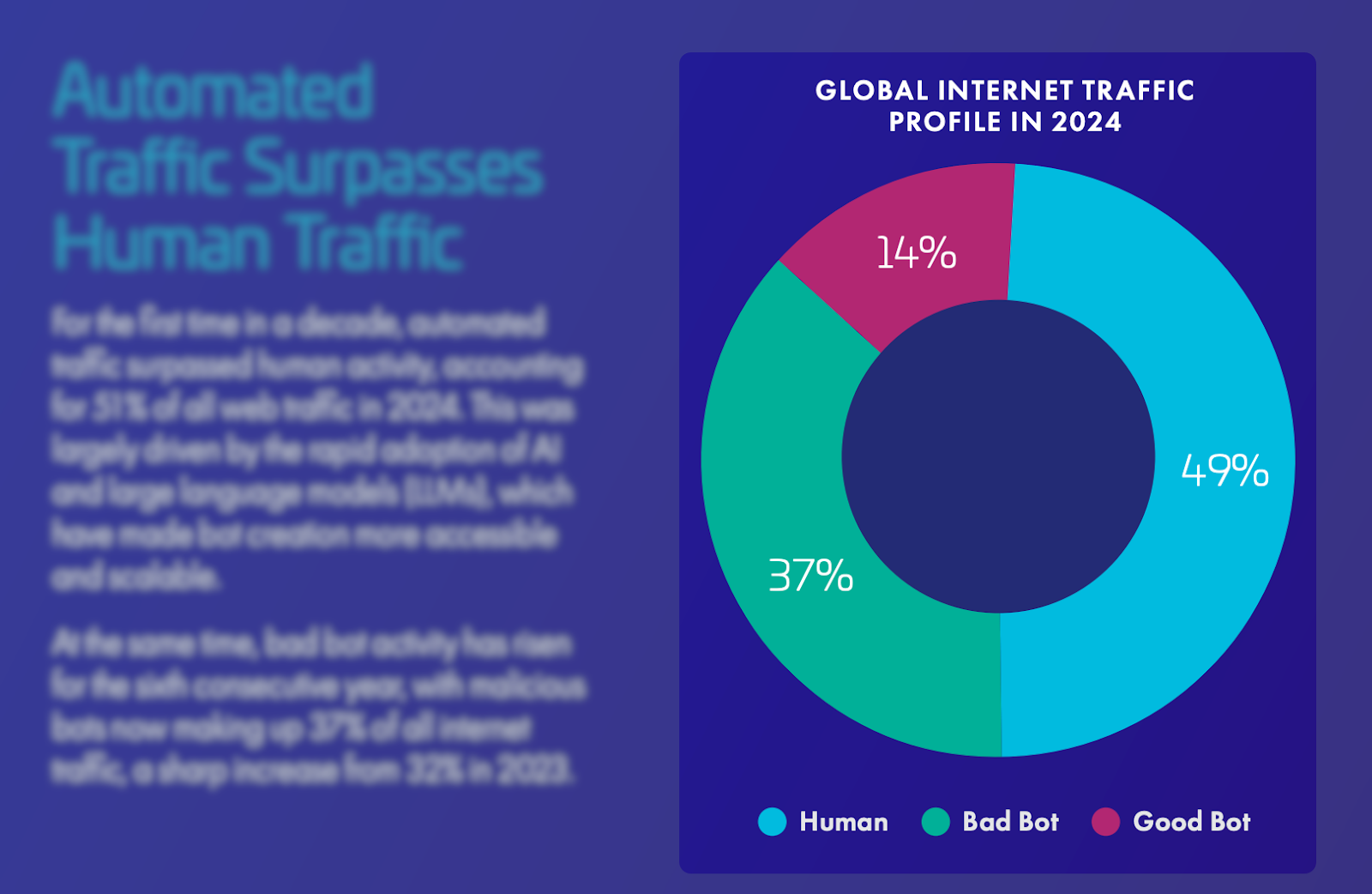
In fact, data from the 2025 Bad Bot Report by Imperva shows that bots now account for 51% of global web traffic. Not all of them are out to ruin ecommerce businesses, but the ratio between good and bad bots is nothing short of concerning.
To better understand what you're dealing with, let's go over a few examples of bot traffic.
Examples of Good Bot Traffic
- Search engine crawlers — Also known as indexing bots, search engine crawlers are in charge of discovering, analyzing, and indexing web content. Some real-world examples are the Googlebot, Bingbot, and Baiduspider.
- Feed bots — Similar to crawlers, feed bots also spend their time exploring the web through links and discovering content. Their purpose, however, is specifically to collect and aggregate public content for syndication or archival (i.e., AppleNewsBot).
- Analytics and monitoring bots — Analytics tools and services like Semrush, Ahrefs, or Pingdom use bots to assess, monitor, and collect site health or performance metrics. These bots make it possible for webmasters to make informed decisions around SEO, backend infrastructure, and other optimization efforts.
- White-hat security and vulnerability scanners — Cybersecurity software and services also use bots to scan your website for potential vulnerabilities more efficiently. Other organizations, like penetration testing platforms and bug bounty programs, may also use academic research bots in an effort to strengthen global web security.
Examples of Bad Bot Traffic
- Scalper bots — In ecommerce, scalper bots automatically purchase high-demand, limited-stock products in bulk (e.g., game consoles, sneakers, and concert tickets). These products are later offered and resold on other marketplaces at inflated prices, denying real customers the opportunity to buy at MSRP.
- Brute force and credential stuffing bots — These bot traffic types are designed to obtain unauthorized access to user accounts. While brute force relies on bulk algorithmic "guesses," credential stuffers utilize data obtained from a previous breach.
- Botnets — Derived from the words "robot" and "network," botnets are networks of internet-connected devices that attackers can remotely control to flood and overload servers with traffic. DDoS is a well-known type of cyber-attack that utilizes botnets, which is often used for extortion or competitive sabotage.
- Spam bots — These bots are responsible for the hundreds (if not thousands) of fake comments plaguing your ecommerce website. Shady businesses also use spam bots to "bomb" competitors with negative reviews or artificially inflate their own ratings.
- Content scraping bots — Content scrapers have been around since the era of black hat SEO. These bots jump into websites to deliberately steal articles or even pieces of code, which are then fed to duplication tools like content spinners.
- Click fraud bots — An advanced type of bot or automated script explicitly developed to generate a ton of clicks, usually on ads. This can be done by malicious competitors to drain your ad budget or by bad actors to illegitimately earn revenue, like affiliate commissions on bot-initiated sales that are pre-programmed to automatically cancel.
It goes without saying that bad bot traffic is detrimental to any ecommerce business, regardless of size.
Extra caution is recommended, especially around critical areas like login pages, checkout forms, and ad conversion endpoints. The same can be said for any page tied to limited-stock drops, which are often the target of scalper bots.
Why Bot Traffic Spikes Before Cyber Monday
There are two things that make Cyber Mondays a target-rich environment for bots: high demand and limited deals.
Around $13.3 billion will change hands come Cyber Monday. With so much at stake, you can bet that bad actors and unethical competitors will use shady automation software to take advantage.
Some of the common, bot-fueled tactics that businesses contend with:
- Scalping high-demand, limited items instantly for resale.
- Brute force login attacks and credential stuffing using stolen accounts — possibly acquired through a previous data breach.
- Scraping your sales funnel pages for information that your competitors can utilize, like product pricing and inventory data.
- Card testing using stolen credit card details on fake checkout forms.
No matter the intent, the use of bot traffic harms online retailers in multiple ways. For one, all performance data stemming from bot traffic is illegitimate, resulting in inflated marketing metrics.
Bot traffic, which often comes en masse, also results in slowdowns and downtime due to the heavy server load. This, in turn, leads to the frustration of real users or genuine shoppers who could've boosted your bottom line.
How to Detect Bot Traffic
Understanding how bot traffic works and learning bot traffic detection are two different things.
Basically, you need to watch out for two types of red flags or indicators:
Analytics Red Flags
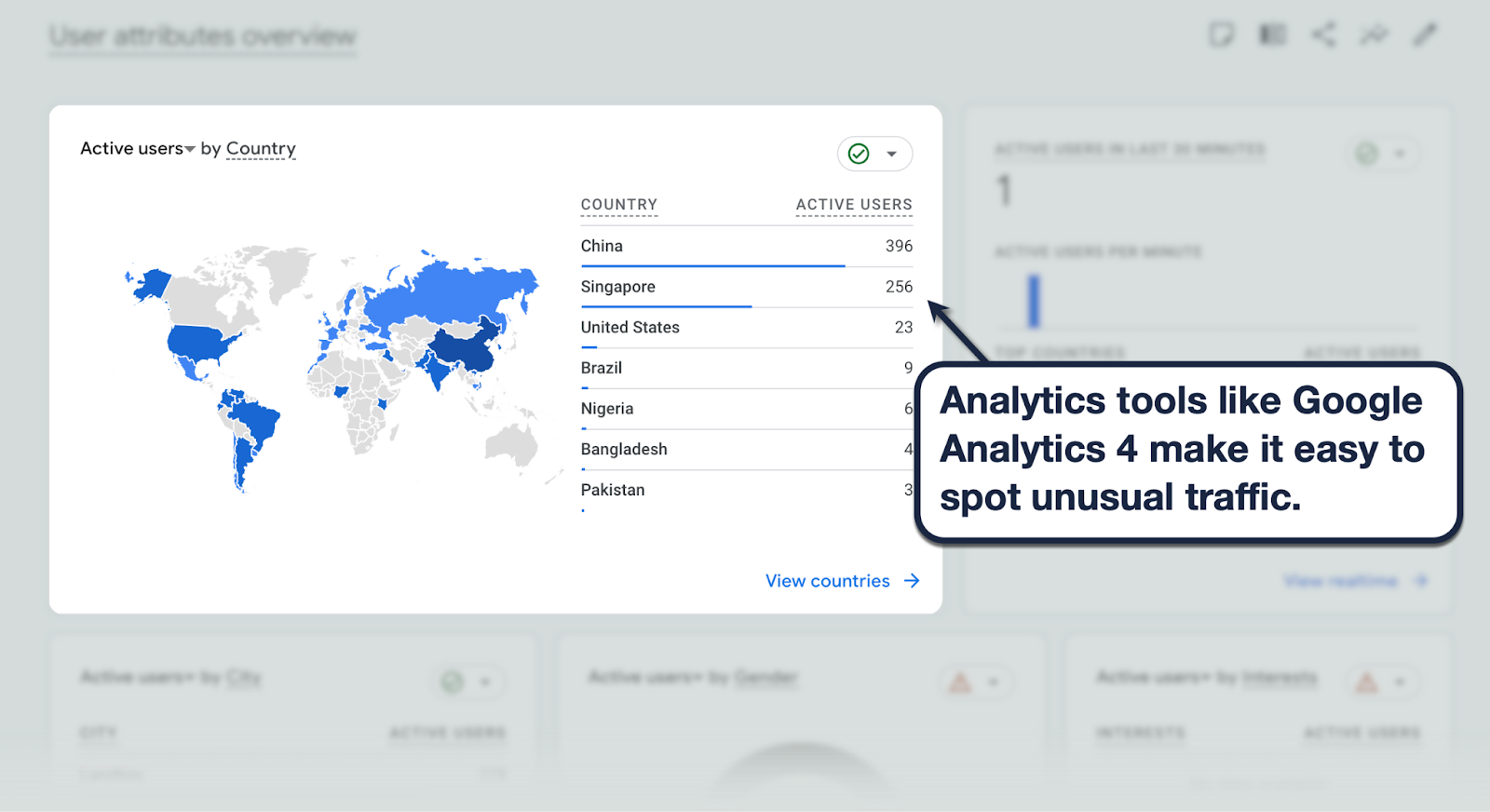
- Unusual spikes in traffic from single regions or IP ranges. Are you getting an unusually high traffic from foreign countries or regions you never advertised to?
- High bounce rates with near-zero engagement time. Although a high bounce rate is normally a call to investigate your page optimization, a skyrocketing bounce rate paired with zero (or near-zero) engagement time is a telltale sign of bot traffic.
- Sudden traffic at odd hours or with repeated patterns. If you're regularly getting traffic spikes during unusual times (i.e., around 3 AM at the source region's local time), your site could be targeted by medium-priority bad bots, including spam bots and content scrapers.
Technical Red Flags
- Repeated requests to the same URLs. A sudden, high volume of requests for a single page (sometimes with the same IP) is another sign of bot traffic in action.
- Abnormal request headers, identical user agents. Only bots are capable of sending hundreds or thousands of requests using identical user agent strings — or requests with malformed/missing HTTP headers (i.e., empty "Accept-Language" header).
- Script-driven behavior in logs. While bots are generally programmed to mimic real user behavior as closely as possible, they can be distinguished due to signs like zero mouse or scroll movement.
Monitoring these red flags starts by looking at your web server logs, which can be found in your hosting provider's control panel interface. You should also strongly consider a mix of tools, including analytics dashboards, bot detection software, and real-time monitoring platforms.
Google Analytics 4, for example, can give you a quick snapshot of your ecommerce website's traffic. The user attributes report, for instance, makes it easy to spot suspicious traffic from countries you don't market to, such as countries with a different primary language.
When left unchecked, bot traffic can have a detrimental effect on your website's performance (your Core Web Vitals), which directly harms SEO and the user experience.
This takes us to the next section…
How to Stop Bot Traffic Before It Hurts You
Here is a rundown of the top strategies used by ecommerce businesses to deter malicious bot traffic:
1. Implement Rate Limiting and Firewalls
When it comes to cybersecurity, the best defense is always prevention.
Rate limiting and robust Web Application Firewall (WAF) implementation on your website infrastructure will slam the door on bots before they can get a toe in your online store.
You can easily implement rate limiting in NGINX with the following code:

This works by limiting requests on your checkout page to only five requests per second per IP ("rate=5r/s").
Other platforms like Cloudflare come with configurable rate limiting and integrated WAF tools, which don't require code. Edge solutions like Nostra AI's Edge Delivery Engine also come equipped with top-level protection measures that filter out malicious bot traffic.
These plug-and-play solutions allow you to block suspicious traffic without lifting a finger.
2. Use CAPTCHA (strategically)
CAPTCHA — short for "Completely Automated Public Turing test to tell Computers and Humans Apart" — is a simple yet highly effective bot deterrent.
You're probably already know what they are and how they work. And, as bots got better at mimicking humans, the complexity of CAPTCHA challenges also increased.
An easy way to use CAPTCHA is to use plugins or widgets specifically designed for your ecommerce platform. Popular platforms like Shopify and BigCommerce also come with native CAPTCHA tools that can be activated from your dashboard.
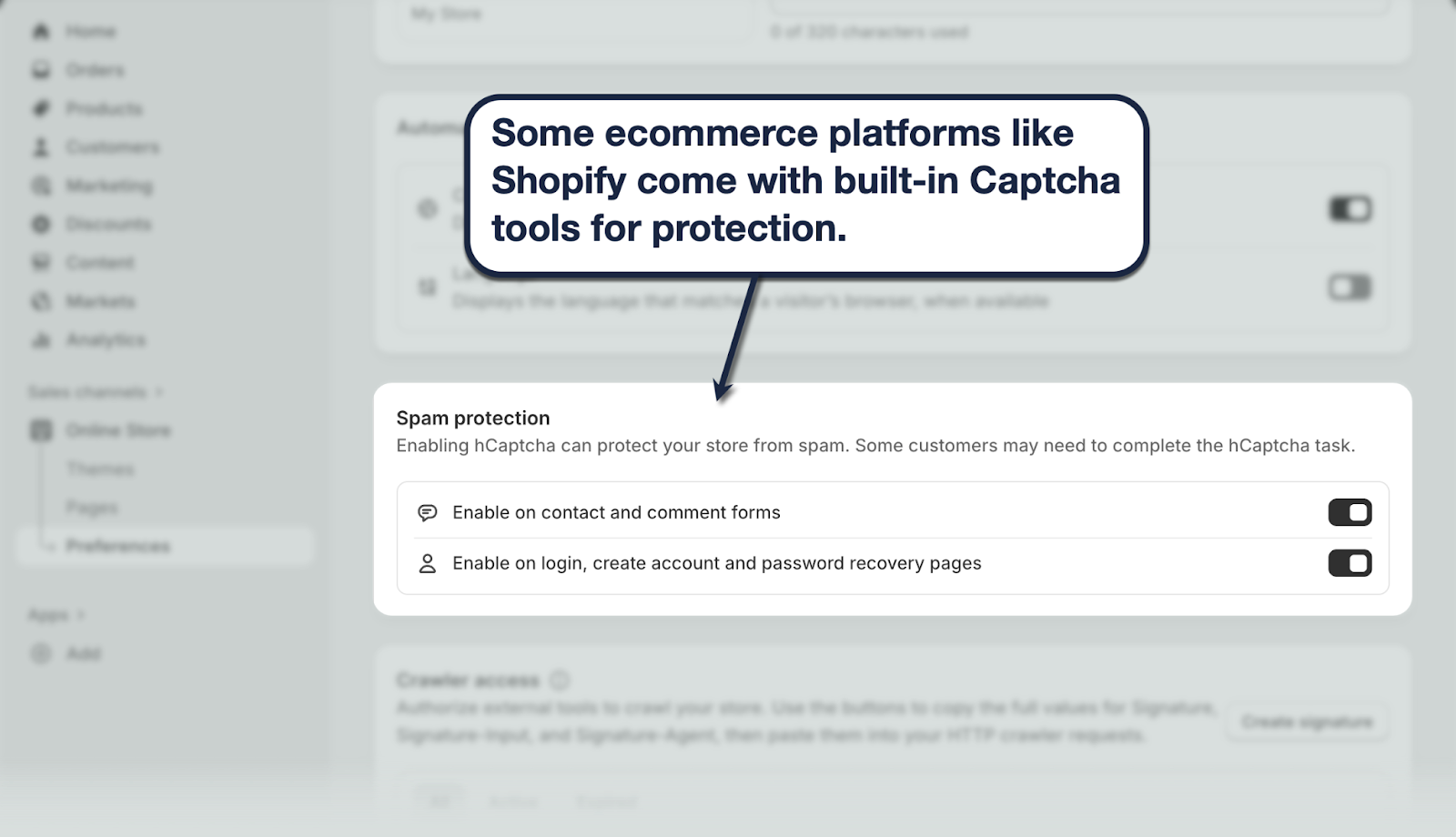
Just remember that CAPTCHA can be a double-edged sword. While they're highly effective in key pages like login and checkout forms, they can disrupt the experience of real customers browsing around your site.
Whatever you do, avoid overusing CAPTCHA, especially on frequently-accessed pages where they may be intrusive, like your:
- Home page
- Product Details Page (PDP)
- Shopping cart page
- Blog posts
- Wishlist
- Static pages (e.g., Contact Us, About, and FAQs)
3. Strengthen Authentication & Session Management
The next step is to add another layer of protection to admin and customer accounts.
A proven strategy is to enforce Multi-Factor Authentication (MFA), which requires an extra authentication step before logins are approved.
For example, after providing the username and password, you still need to submit a One-Time Password (OTP) sent via SMS or email before you gain access. This is extremely useful for preventing unauthorized access following a successful brute force login or credential stuffing attack.
As an extra precaution, enforce session token rotation to protect consumers from remote attackers who can hijack their sessions via Cross-Site Scripting (XSS) or malware.
4. Leverage Device Fingerprinting and Threat Intelligence
Device fingerprinting is the practice of monitoring and tracking unique user browser and device signals, including but not limited to:
- Browser version
- Operating System (OS) and build
- Screen resolution and color depth
- Timezone and language settings
- GPU details and WebGL renderer
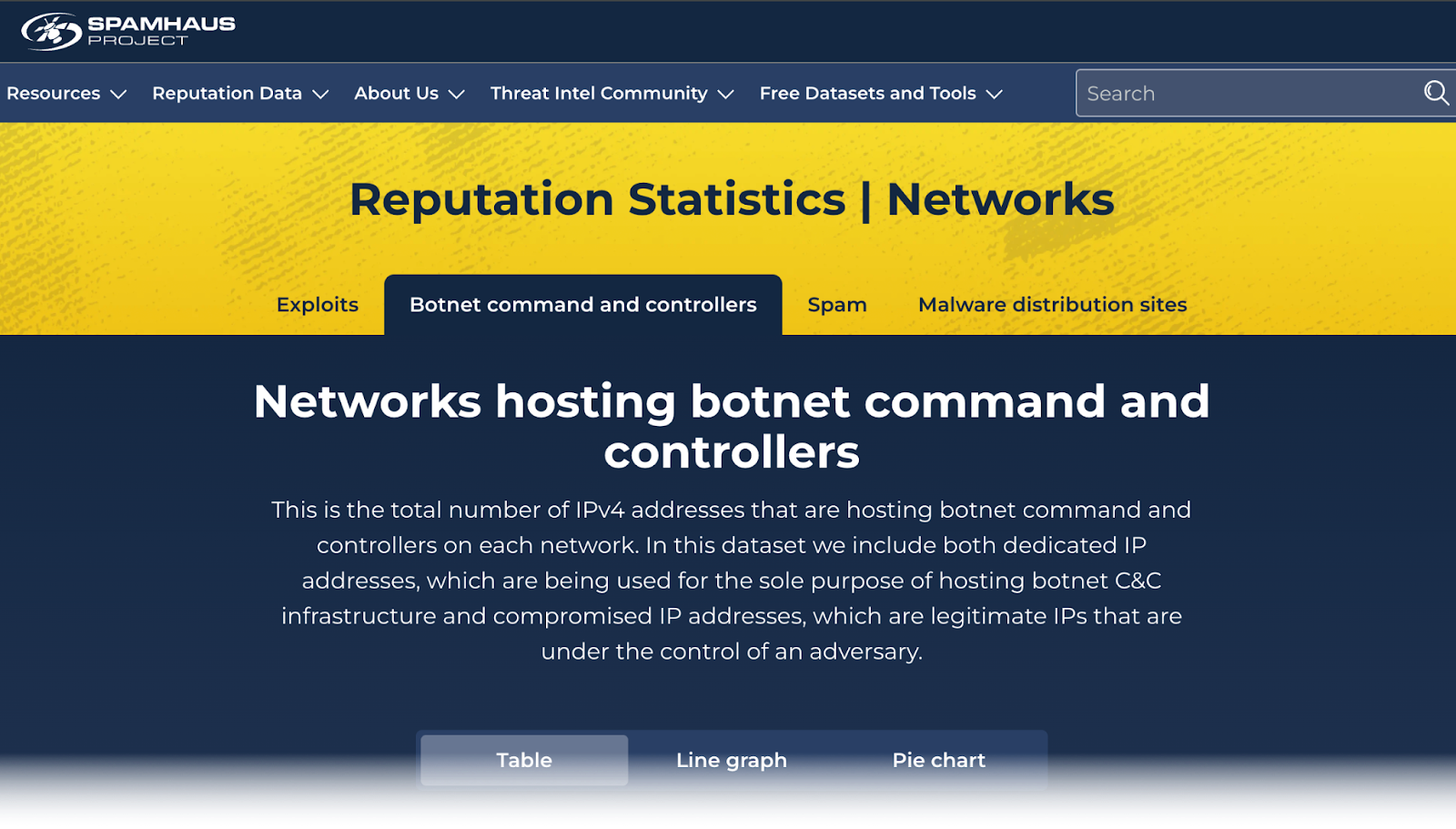
Paired with threat intelligence feeds like Spamhaus or IPQS, you can easily configure blocking rules against known botnets and low-quality IPs.
Apart from improving security, device fingerprinting can also help empower your ecommerce personalization efforts.
Just take note that device fingerprinting is no longer a viable strategy for customers running on iOS 26, particularly through the Safari mobile browser. A workaround is to start investing in your own first-party data repository or using edge-based tracking solutions like Nostra AI's Edge ID.
5. Employ Edge-Level Protection (via Reverse Proxy)
Finally, you can easily address most of your ecommerce website's bot-related vulnerabilities using edge-level protection.
Nostra AI's Edge Delivery Engine, for example, comes with an optimization layer that intelligently filters out automated requests while maintaining a seamless experience for real customers.
Smart, edge-side caching also acts as a cushion that can preserve your website's peak performance during high-traffic spikes or even bot attacks.
Like what you see?
Don't worry — that's just the tip of the iceberg.
How Nostra Helps Ecommerce Brands Stay Protected
The Nostra AI edge infrastructure, using reverse proxy logic, can function as a performance optimization and protection layer that filters out harmful bot traffic before it reaches your core systems.
In addition to our Edge Delivery Engine, we also offer Edge Protect — a brand new product designed to keep bad bots out and all the good traffic in.

Here's a closer look at Edge Protect's features:
- Edge-Level Detection — Stop bot traffic dead in its tracks as soon as each HTTP request is received. Filtering occurs instantly, ensuring no bad bot ever comes close to your infrastructure.
- Bot detection + performance optimization — There's no need to compromise between security and customer experience. Just like bots, legitimate traffic is detected and allowed to pass through in real time, keeping the human experience as smooth as ever.
- Ensure clean data — Edge Protect's early detection action prevents any bot traffic noise from infesting your user behavior and analytics tracking systems. This leads to numerous benefits, like better ad spend allocation and sharper customer personalization decisions.
Since Edge Protect is implemented on an edge-level, rest assured that your PDPs, checkout pages, and API endpoints are all covered.
In a nutshell, Nostra AI Edge Protect also prevents downtime and maintains fast load times even during high-traffic surges — legitimate or automated. It also helps brands preserve accurate analytics, maximizing the efficiency of their marketing attribution and CRO efforts.
Conclusion
Bot traffic is inevitable, but damage isn't.
It's crucial to stay ahead and spruce up your infrastructure's security, performance, and scalability before high-traffic events like Cyber Monday arrive. Remember, prevention is much more cost-effective than recovery, so be sure to act soon to protect your data, keep customers happy, and secure your ROI.
Run a free speed and security test with Nostra AI to see how edge optimization keeps your site fast, secure, and ready for real customers this Cyber Monday.


